South Africa is a country shaped by many cultures, languages, and belief systems — and nowhere is this more visible than in the way families say goodbye to loved ones. From ancestral rites in rural homesteads to modern celebrations of life in city chapels, funeral practices across the country reflect both deep tradition and a rapidly changing society. Understanding these differences helps families navigate their own choices with respect, dignity, and confidence.
Why Funeral Traditions Matter in South Africa
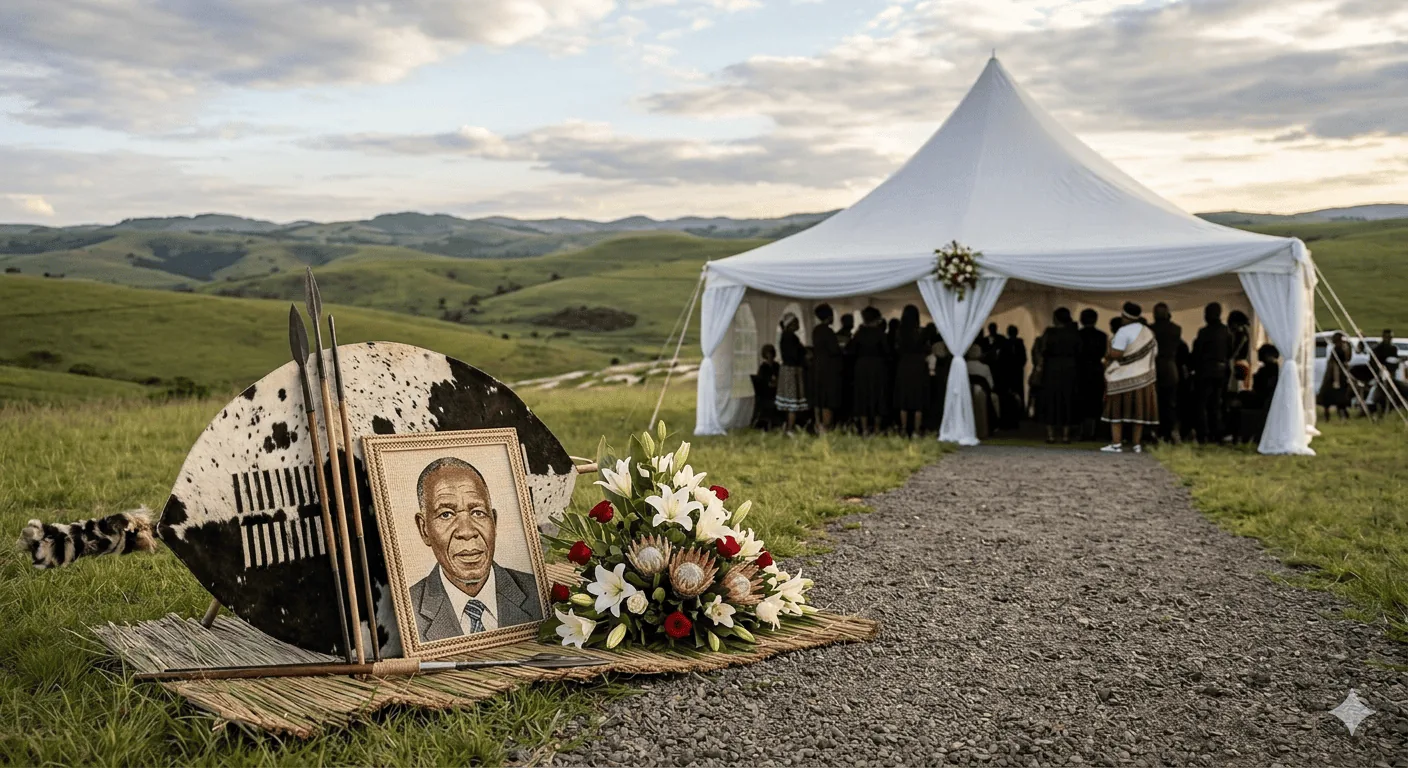
Funerals in South Africa are far more than a farewell. They are a cultural event, a spiritual act, and often the single largest gathering a family will host. In many communities, how a person is buried carries as much significance as how they lived. The rituals performed during a funeral are believed to ensure safe passage for the deceased and ongoing protection for the living.
With 11 official languages and dozens of cultural groups, South Africa has one of the most diverse funeral landscapes in the world. Yet urbanisation, Christianity, Islam, and globalisation have introduced new practices that sit alongside — and sometimes replace — ancestral customs. Today, many families find themselves blending traditional and modern elements to create services that feel both culturally grounded and personally meaningful.
Traditional Funeral Practices by Culture
Zulu Funerals (KwaZulu-Natal)
Zulu funerals are deeply spiritual occasions governed by respect for the amadlozi (ancestors). When a person passes, the body is traditionally kept at home. Family elders lead the process, and it is customary for neighbours and community members to visit the bereaved family throughout the mourning period — a practice known as ukuzila.
Key rituals include slaughtering a beast (usually a cow or goat) to communicate with the ancestors, washing the body according to tradition, and ensuring the deceased is buried facing a specific direction. After burial, a cleansing ceremony called ukugeza takes place, often involving the burning of impepho (a sacred herb). A final ceremony, ukubuyisa, is held weeks or months later to bring the spirit of the deceased back home to watch over the family.
Xhosa Funerals (Eastern Cape)
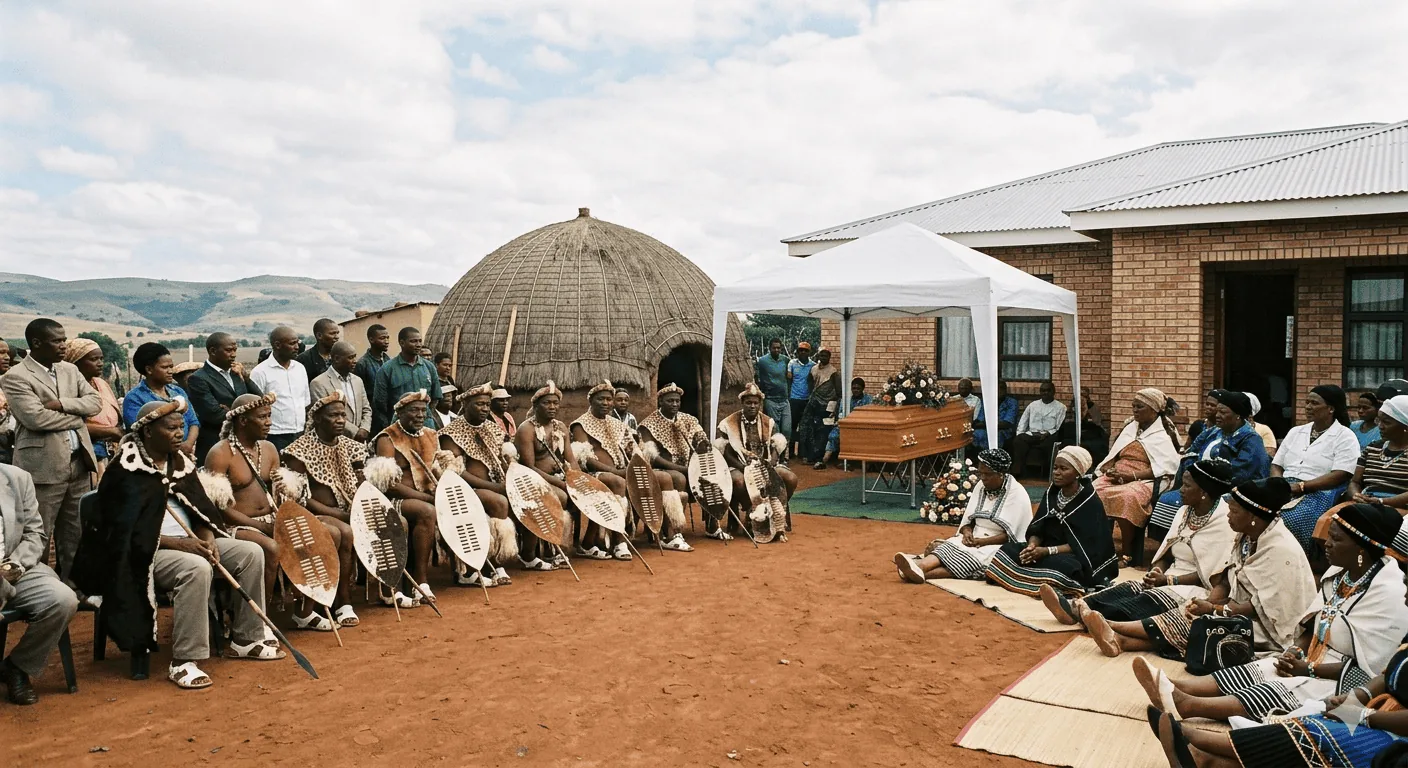
Xhosa funeral customs share similarities with Zulu traditions but carry their own distinct character. Mourning begins immediately, with women covering their heads and wearing dark or black clothing. The family gathers in the home of the deceased, and community members bring food, firewood, and support during the mourning period.
Before the burial, an animal is slaughtered as a ritual offering. The body is traditionally buried in the family homestead or ancestral land. After burial, a ritual called ukuhlamba amathambo (washing of hands) cleanses the mourners. Widows undergo a lengthy mourning period that can last up to a year, during which they dress in black and observe certain restrictions. The unveiling of the tombstone, often held a year later, marks the formal end of mourning.
Sotho and Tswana Funerals
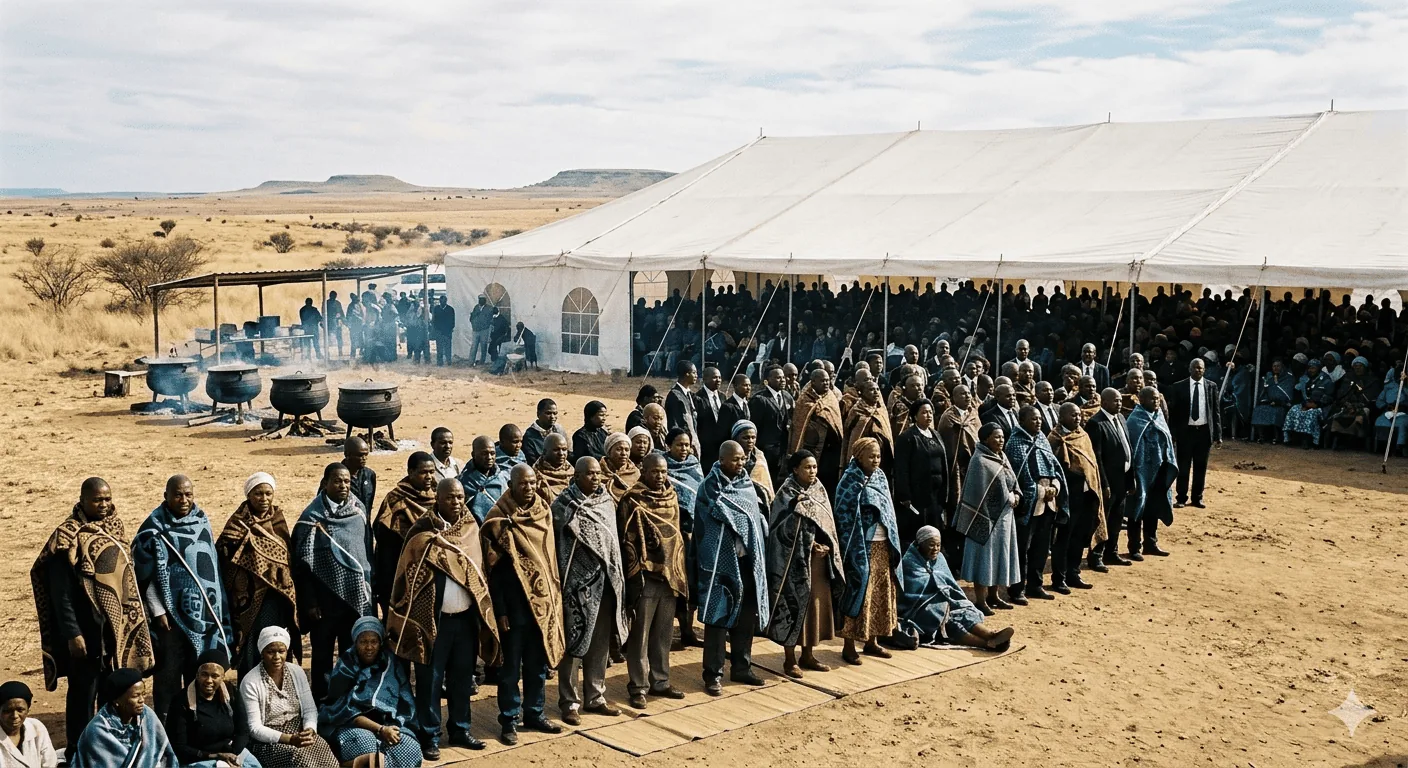
Among the Sotho and Tswana peoples, funerals are communal events where the entire village participates. The lebollo (mourning process) involves family and community members gathering at the deceased's home, often for several days. Night vigils (moletelo) are central — these involve hymn singing, prayer, and sharing stories about the deceased.
Traditional Sotho burials require that the grave be dug by male relatives and community members, a task considered an act of respect rather than labour. After burial, the family observes a mourning period, and a beast may be slaughtered. The pitso (family meeting) held after the funeral often addresses matters of inheritance and family leadership.
Afrikaner and Christian Funerals
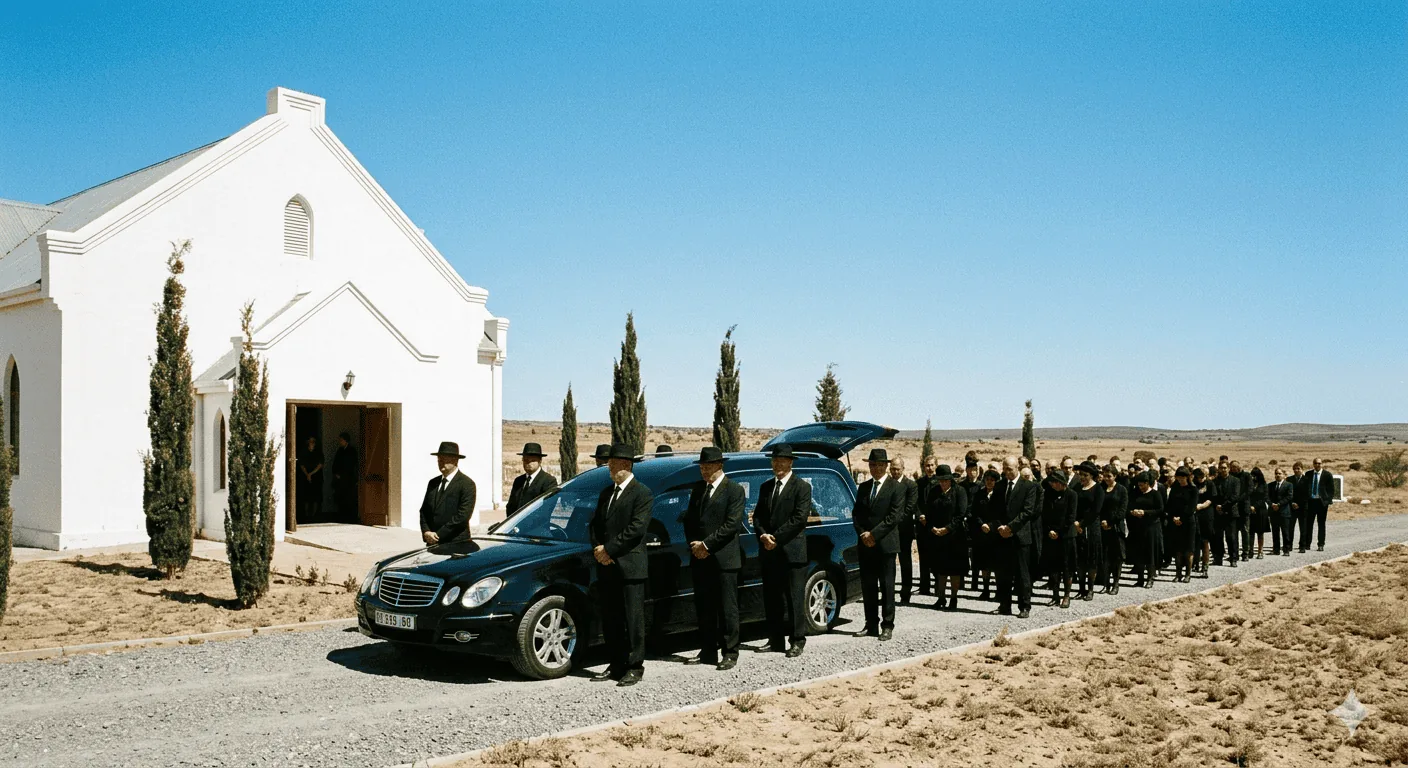
Afrikaner funerals typically follow a Christian church service format, often held in a Dutch Reformed or similar Protestant church. The service includes Scripture readings, hymns (frequently in Afrikaans), a sermon, and personal tributes from family and friends. A reception with tea and refreshments usually follows the burial.
Many Afrikaner families place significant importance on the graf (grave) and its upkeep. Elaborate headstones and well-maintained plots are common, and families visit graves on anniversaries and religious holidays. Cremation, once rare, has become increasingly accepted in recent decades.
Muslim Funerals
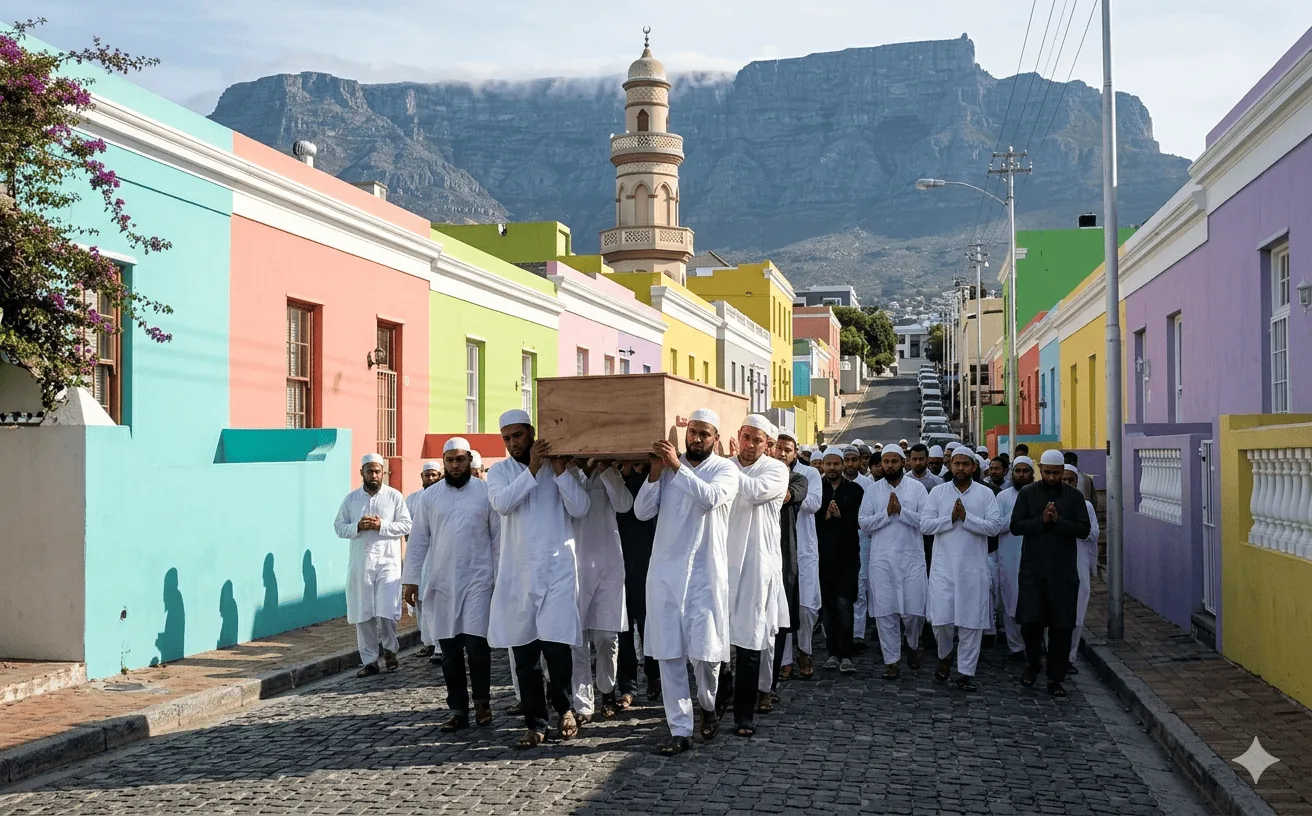
Islamic traditions require that burial take place as soon as possible after death — ideally within 24 hours. The body is ritually washed (ghusl) by same-gender family members, wrapped in white cloth (kafan), and a funeral prayer (Salat al-Janazah) is performed at the mosque or an open area. The body is buried without a coffin, lying on its right side facing Makkah.
A three-day mourning period follows, during which the community visits the bereaved family and provides meals. Elaborate funerals, excessive spending, and ostentatious displays are discouraged. The focus is on simplicity, dignity, and returning to Allah.
Modern Funeral Trends in South Africa
While traditional customs remain strong in many communities, urbanisation and globalisation have brought significant changes to how South Africans approach funerals. Here are some of the most notable modern trends:
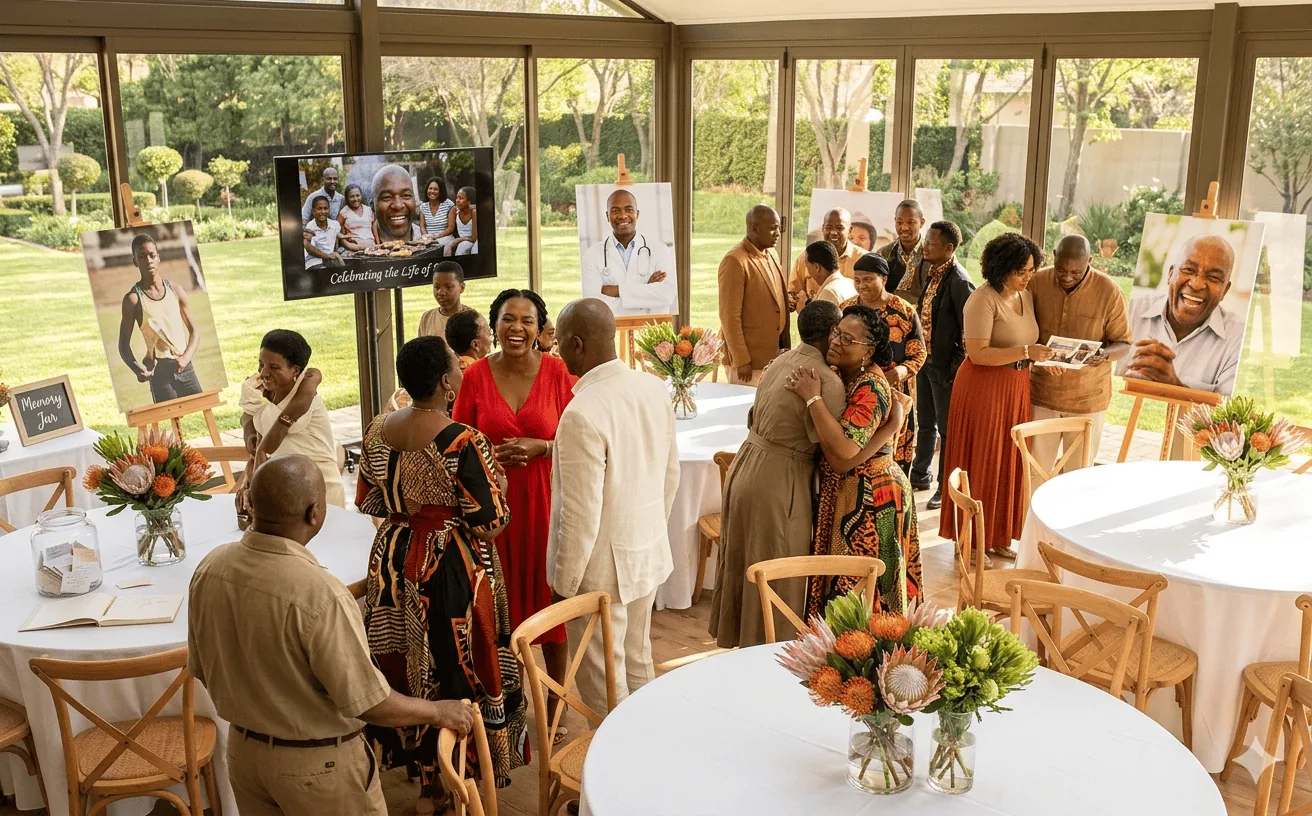
- Celebrations of life — Rather than sombre affairs, many families now host joyful gatherings with music, slide shows, and speeches that focus on the person's achievements and character.
- Personalised themes — Funerals featuring the deceased's favourite colours, sports teams, or hobbies have become increasingly common, especially in urban areas.
- Digital memorials — Online tribute pages allow families to share obituaries, photos, and condolence messages with relatives who cannot attend in person. Platforms like TributePoint have made it easy to create these at no cost.
- Livestreaming services — Accelerated by the COVID-19 pandemic, many funeral homes now offer live video streaming so that family members abroad or in other provinces can participate.
- Cremation — Once uncommon outside of certain religious groups, cremation is now chosen by a growing number of South African families, particularly in cities like Johannesburg, Cape Town, and Durban.
- Eco-friendly burials — Some families are opting for biodegradable coffins, natural burial sites, and tree-planting ceremonies as a way to honour loved ones while caring for the environment.
- Pre-planning — Funeral insurance and pre-planned arrangements have become widespread, allowing families to reduce financial stress during an already difficult time.
Side-by-Side: Traditional vs. Modern
| Aspect | Traditional | Modern |
|---|---|---|
| Location | Family homestead, ancestral land | Funeral parlour, church, or memorial garden |
| Tone | Solemn, ritual-driven | Can be celebratory, personalised |
| Duration | Multiple days of mourning at home | Often a single-day service |
| Community role | Entire village/community participates | Close family and friends; others attend online |
| Rituals | Animal slaughter, cleansing, ancestral rites | Slide shows, tributes, music playlists |
| Sharing | Word of mouth, community visits | Digital obituaries, social media, livestreams |
| After-care | Extended mourning period, unveiling ceremony | Online memorial page, memory sharing |
Blending Old and New: What Many Families Are Doing
The reality for most South African families today is not a choice between traditional and modern — it is a blend of both. A family in Soweto might hold a night vigil with hymns and prayers, slaughter a goat in the morning, then share a digital tribute page with relatives in London via WhatsApp. A Cape Town family might have a church service followed by a personalised slide show set to the deceased's favourite jazz music.
This blending is healthy and natural. Cultural traditions evolve — they always have. The key is that families feel empowered to honour their loved ones in a way that feels authentic to them, without feeling pressured to choose between heritage and modernity.
If you are planning a funeral that blends traditional and modern elements, communicate clearly with family elders about which customs are most important. Many funeral directors in South Africa are experienced in accommodating both traditional rites and contemporary preferences in a single service.
How Digital Tools Support Both Traditions
One of the great strengths of digital memorial platforms is that they complement — rather than replace — any type of funeral. Whether your family follows strict ancestral customs or hosts a modern celebration of life, a digital memorial page serves as a permanent, accessible record that anyone can visit at any time.
With TributePoint, families can:
- Share the obituary and service details with distant relatives before the funeral
- Collect condolence messages and memories from those who cannot attend
- Upload photos from the service, the night vigil, or family gatherings
- Provide a permanent link that lives on long after the funeral is over
This is particularly valuable in South Africa where families are often spread across provinces or even continents. A digital tribute page bridges the distance and ensures no one is left out.
Respecting Cultural Differences During Grief
When a family includes members from different cultural backgrounds — increasingly common in South Africa's diverse society — navigating funeral customs can be sensitive. Here are some respectful approaches:
- Ask, don't assume — Different communities have different expectations. A quiet conversation with elders or cultural leaders goes a long way.
- Acknowledge all traditions — If the deceased had ties to more than one culture, find ways to honour each. Even a brief acknowledgement during the service is meaningful.
- Be flexible — There is no single "right way" to have a funeral in South Africa. What matters most is that the family feels the service was dignified and true to their loved one.
- Support the bereaved — Regardless of tradition, bringing food, visiting the family, and offering practical help (transport, childcare, funeral admin) are universally appreciated.
Final Thoughts
South Africa's funeral traditions are as rich and varied as its people. Whether you follow time-honoured ancestral customs, embrace modern innovations, or blend the two, what matters most is that you honour your loved one in a way that brings comfort and meaning to your family.
If you would like to create a lasting tribute that complements your funeral traditions — whether traditional, modern, or a mix — TributePoint makes it simple. Our free platform lets you build a beautiful memorial page in minutes, share it with family anywhere in the world, and preserve your loved one's memory for years to come.
Create a Tribute That Reflects Your Family's Heritage
Build a free memorial page that captures your loved one's story — whatever your traditions.
Create Your TributeReal Family Conversations: When Tradition and Modern Choices Collide
The hardest part of choosing between traditional and modern funeral practices is rarely the cost or the logistics — it is the conversations inside the family. Below are the situations we see most often when working with South African families, and how families have navigated them.
The Urban Child, the Rural Parent
A common scenario: a person who grew up in a Limpopo or Eastern Cape village moved to Johannesburg or Cape Town for work in their twenties, built a life there, and died in the city in their fifties or sixties. The family in the village expects ukubuyisa — the body returning home for burial in the family plot. The spouse and children in the city, who built their lives away from the homestead, may want a service in the city where the person actually lived. There is rarely a "right" answer. The most common compromise is a memorial service in the city for friends and colleagues, followed by repatriation of the body for burial in the rural area, with a second smaller service there. Repatriation costs typically run R6,000–R15,000 depending on the province, plus mortuary fees. Most reputable funeral parlours arrange this routinely.
The Mixed-Faith Family
Modern South African families often span multiple faiths. A Muslim grandfather married into a Christian family. A Hindu mother whose children grew up attending Anglican schools. An ancestral-tradition father whose adult children became Pentecostal. When death comes, two sets of expectations meet at once. Some families hold two services — for example, a Janazah prayer first within Islamic timing, then a memorial gathering for the wider family later. Others choose the faith of the deceased and ask everyone else to attend respectfully. The key is to discuss this before the death where possible, particularly with elderly parents, so that the spouse and children know what the person themselves wanted.
Cremation in a Family That Has Always Buried
Cremation rates in South Africa have risen substantially in the last 15 years, particularly in urban areas, but it remains controversial in many traditional families. Among most Black South African families with strong ancestral traditions, the body is expected to return to the soil so that the spirit can join the ancestors. Choosing cremation for a parent who came from this tradition can cause significant family distress, even when the cremation was the deceased's own wish. If you are facing this, ask whether a written wish exists (a will, a letter, a recorded conversation), and consider a smaller ceremonial gathering at the family homestead even after cremation — ashes can be interred in the family plot in a small ceremony, which often satisfies both the modern wish and the traditional expectation. See our guide on burial vs cremation in South Africa for the practical and cost differences.
Live-Streaming a Traditional Service
One of the clearest examples of tradition and modernity working together is the live-streamed funeral. The service itself can follow every traditional element — hymns, eulogies in isiZulu or Sesotho, the family elders' speeches, the procession to the gravesite — while a single phone on a tripod allows relatives in London, Perth, Toronto and the UAE to participate in real time. Most South African pastors and traditional leaders have become entirely comfortable with this, particularly since 2020. See our live-streaming funeral service guide for the practical setup.
The Cost Conversation
Traditional funerals in South Africa — with a slaughter (ox or sheep), a tent, catering for 200–400 people, and an extended programme — often run R40,000–R80,000 even with burial society support. Modern, simpler services with cremation, a chapel ceremony, and tea afterwards for 50 people can be done for R12,000–R25,000. Neither is morally better. Some families feel that cutting corners on a parent's funeral dishonours them; others feel that spending money the family does not have on a single day is itself a failure of stewardship. The most important thing is that the conversation happens openly, ideally before the death, between siblings — not after the funeral when resentment about who paid what becomes permanent.
The Role of Burial Societies in Both Worlds
Burial societies (masingcwabisane, mahlalela, kgotla ya phupu) remain one of the most powerful financial and social institutions in South African funeral planning. Members typically contribute R50–R300 per month and receive payouts of R5,000–R30,000 plus practical support — the society's women cook, the men help with logistics, the chairperson coordinates with the funeral parlour. Modern families sometimes assume burial societies are old-fashioned, but they remain the most efficient way most working-class South Africans manage funeral costs and labour. If your parent is a member, contact the society's secretary as soon as possible after the death.
What Modernisation Has Genuinely Improved
- Notification. A WhatsApp message or memorial page link reaches everyone within an hour. Old printed obituary notices reached only those who bought that day's newspaper.
- Coordination. Online RSVPs, shared maps, live event updates, and digital programmes have made the logistical side dramatically easier.
- Cross-border participation. Live-streaming and digital condolence walls allow the SA diaspora to remain meaningfully part of family rituals.
- Documentation. Digital tribute pages preserve photographs, eulogies and condolence messages indefinitely — in the past, these were often lost within a few years.
What Tradition Still Holds That Modernisation Cannot Replace
- Physical presence at the night vigil. Sitting with the family through the night is something a video call genuinely cannot replicate.
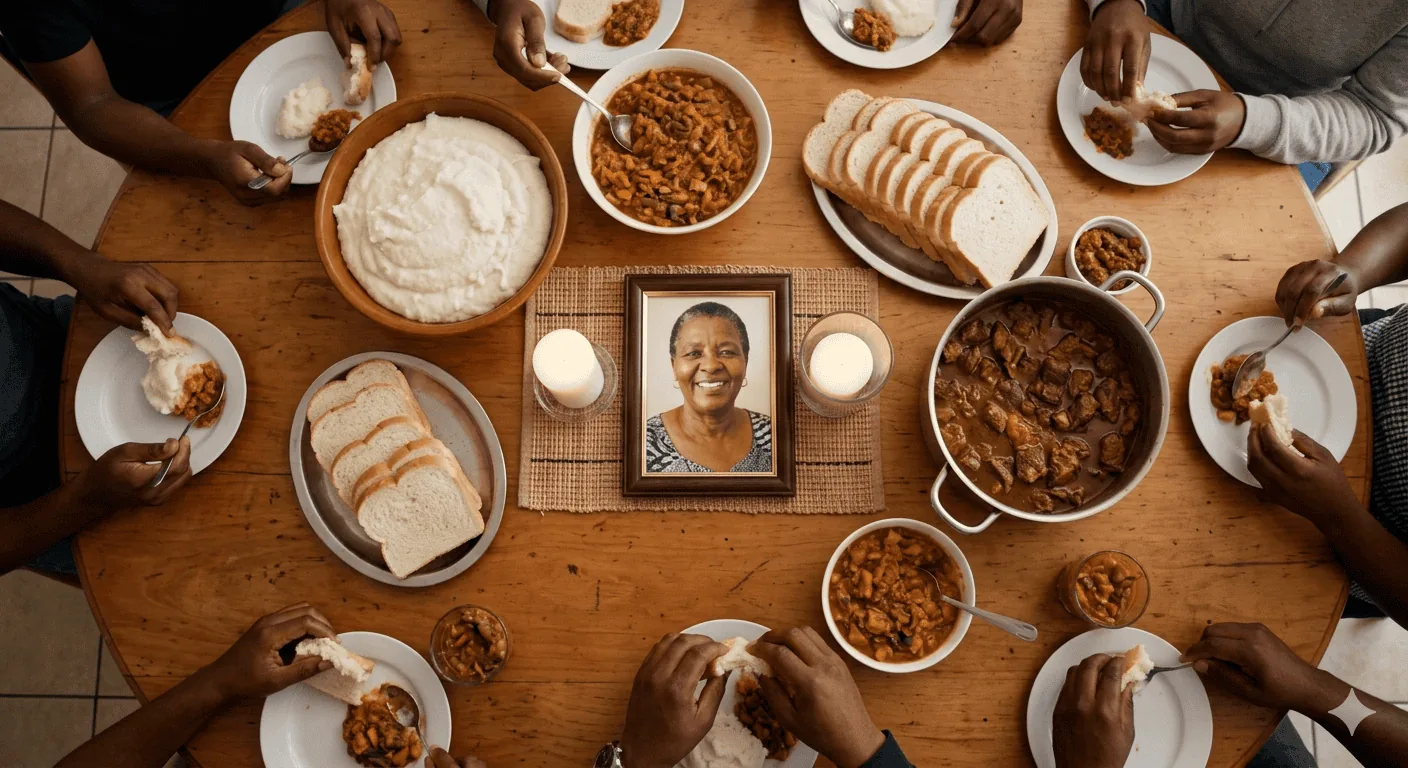
- Communal cooking and labour. The act of cousins and neighbours preparing food together carries grief in a way that catering does not.
- Spoken eulogies in the home language. Praise names, clan names (izithakazelo, direto) and elders' speeches in isiXhosa, isiZulu, Sepedi or Tshivenda carry weight that English summaries lose.
- The procession. Walking with the coffin from the home to the church, or from the church to the gravesite, marks the transition in a way that no streaming feed can.
Frequently Asked Questions
Can a tribute page support both traditional and modern elements? Yes. The page can include a traditional praise-name section, scanned photos of the homestead, the eulogy in the home language, alongside a live-stream link and digital condolence wall. There is no contradiction.
How do I respect elders who do not use phones? Print the tribute page as a memorial booklet (using our funeral programme builder), and include a QR code for younger family members. Elders read the printed version, the rest of the family scans the code.
Is it disrespectful to skip the slaughter? This depends entirely on your family and tradition. In most cases, the elders should be consulted before any decision is made — even if you ultimately choose differently, the consultation matters.
Can the same memorial page serve a Christian service and a traditional gathering? Yes. Many families add both events to the same page (the church service and the post-burial gathering at the homestead) so that everyone has the full schedule.

Thabo Dlamini is TributePoint's Cultural Traditions Researcher. He writes about South African funeral customs, etiquette, and faith traditions so families can plan with confidence and cultural respect.
Also helpful: Create a free funeral tribute for an upcoming service, or a Legacy Memorial Page for a loved one who passed long ago. Explore more practical support in our South African funeral guides.