A funeral week often feels like a blur of calls, voice notes, travel plans, and repeated questions. One aunt wants the venue pin, cousins abroad need the livestream, and someone is still asking for the obituary after the programme has already been sent out. This guide is about organising that communication so distant family are included without the family having to repeat everything ten times.

Why Sharing a Tribute Matters
Grief does not respect geography. A grandmother in Limpopo, a brother working in Gauteng, a cousin studying in the United Kingdom — each of them needs a way to say goodbye, to see the photos, to read the obituary, and to share their own memories. When families are separated by distance, a shared tribute becomes a lifeline of connection during the most difficult days.
Sharing a tribute is not just about informing people of a death. It is about including them in the process of remembering. It gives distant family members a sense of participation — a way to contribute a message, light a virtual candle, or simply sit with the memories in their own time, in their own space.
In South Africa, where millions of people live and work away from their ancestral homes, the need for accessible, shareable tributes has never been greater. The good news is that modern tools make it straightforward.
Step 1: Create a Central Tribute Page
The most effective way to share a tribute with scattered family is to have one central, accessible page that contains all the essential information. Rather than sending multiple messages with different details to different groups, create a single digital memorial page that serves as the single source of truth.
A good tribute page should include:
- Full name and any names the person was known by
- Date of birth and date of passing
- A written obituary or life story — even a few heartfelt paragraphs make a difference
- Photos from different stages of life
- Funeral or memorial service details — date, time, venue, and any livestream links
- A way for visitors to leave condolences or share their own memories
With TributePoint, you can build this page in minutes. It is free, works on any device, and produces a clean link you can share anywhere.
Create the tribute page as early as possible — even before all the funeral details are finalised. You can update the page later. Having something to share immediately gives family members a place to connect right away.
Step 2: Choose the Right Channels to Share
Different family members use different platforms. The goal is to reach everyone in a way that feels natural to them. Here are the most effective channels for South African families:
WhatsApp — The #1 Channel
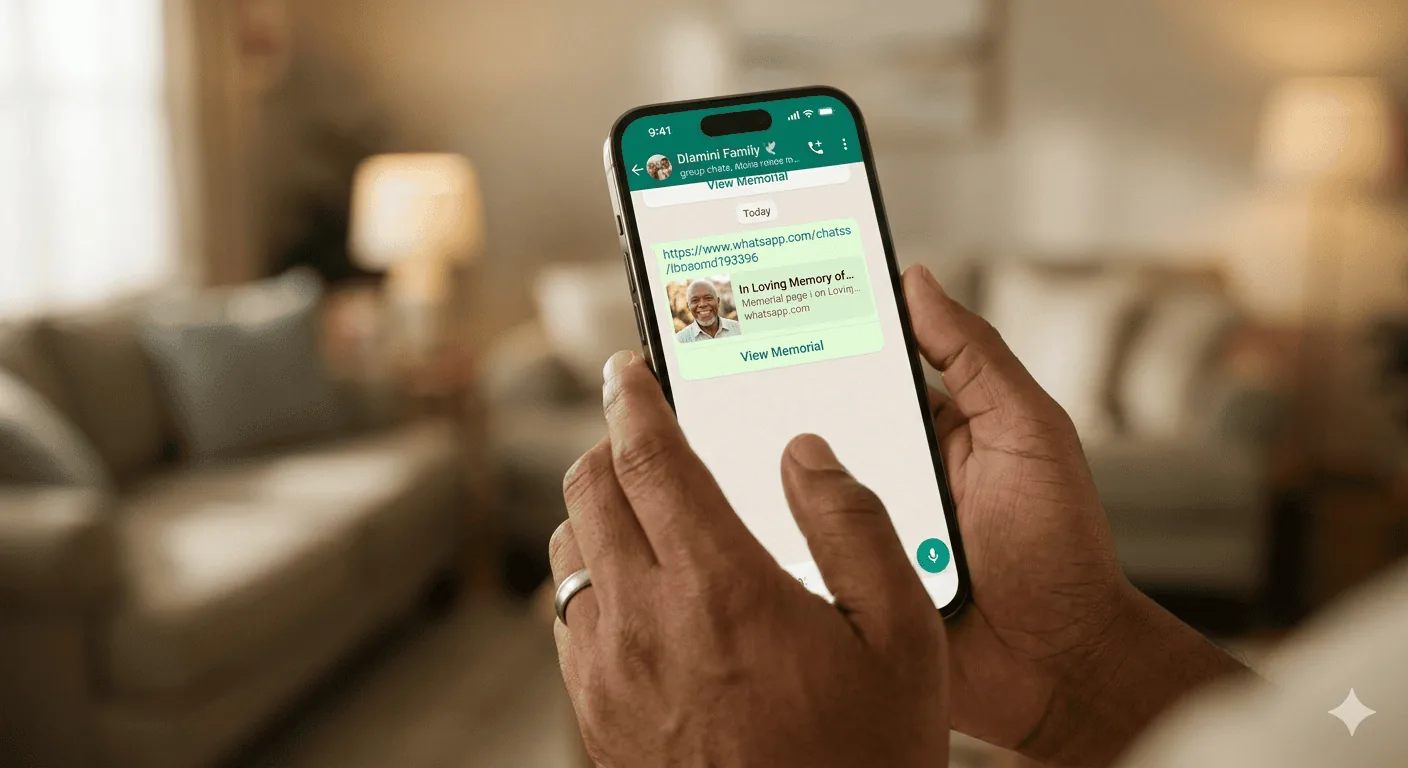
WhatsApp is by far the most used communication app in South Africa. Share the tribute link in relevant family groups and in direct messages to key relatives. Include a brief message: "We have created an online tribute page for [Name]. You can view photos, read the obituary, and leave a message here: [link]." Avoid overloading the group — send the link once, pin it, and let family revisit it at their own pace.
Many South African families use Facebook to connect across distances. Share the tribute link as a post on your own profile or in a private family group. Facebook's reach can help the tribute find its way to people you may have forgotten to message directly. Be mindful of privacy — if the family prefers to keep things private, use a closed group rather than a public post.
For older family members or professional contacts who may not be active on social media, email remains reliable. A short, dignified email with the tribute link, funeral details, and a personal line is appropriate. Consider BCC-ing recipients to protect everyone's privacy.
SMS
Some relatives — especially elderly family members in rural areas — may not use smartphones or data-heavy apps. A simple SMS with the essential funeral details and a shortened link to the tribute page can reach them. Keep the message short. If they cannot access the link, the SMS itself should contain the core information (date, time, venue).
Phone Calls
For very close relatives or elderly family members, a phone call is still the most respectful way to share the news. After the call, follow up with a WhatsApp or SMS containing the tribute link. The call delivers the emotional weight of the news; the link provides the practical details they can reference later.
Funeral-Week Communication Workflow
A tribute page works best when it becomes the centre of a simple weekly workflow. Early in the week, the family or funeral home creates the page and adds only the confirmed basics. As more details are locked in, the same page is updated rather than replaced. That matters because families often end up with several posters, several screenshots, and several versions of the truth floating around at once.
Once the page exists, the clean link can be shared in WhatsApp groups, added to the funeral programme, or turned into one of the QR codes many families now use at funerals. When the livestream is ready, it can be added to the same page rather than sent separately. In practice, that means one coordinated system: the tribute page carries the updates, the QR code helps guests find it quickly, and the livestream sits where everyone expects it.
This also makes last-minute changes less chaotic. If the time shifts, the venue pin changes, or the service recording is added afterwards, the family updates one link and keeps sharing the same page.
Step 3: Include Distant Family in the Funeral
Sharing a tribute page is the foundation — but there are additional ways to make distant relatives feel included in the actual service:
Livestream the Service
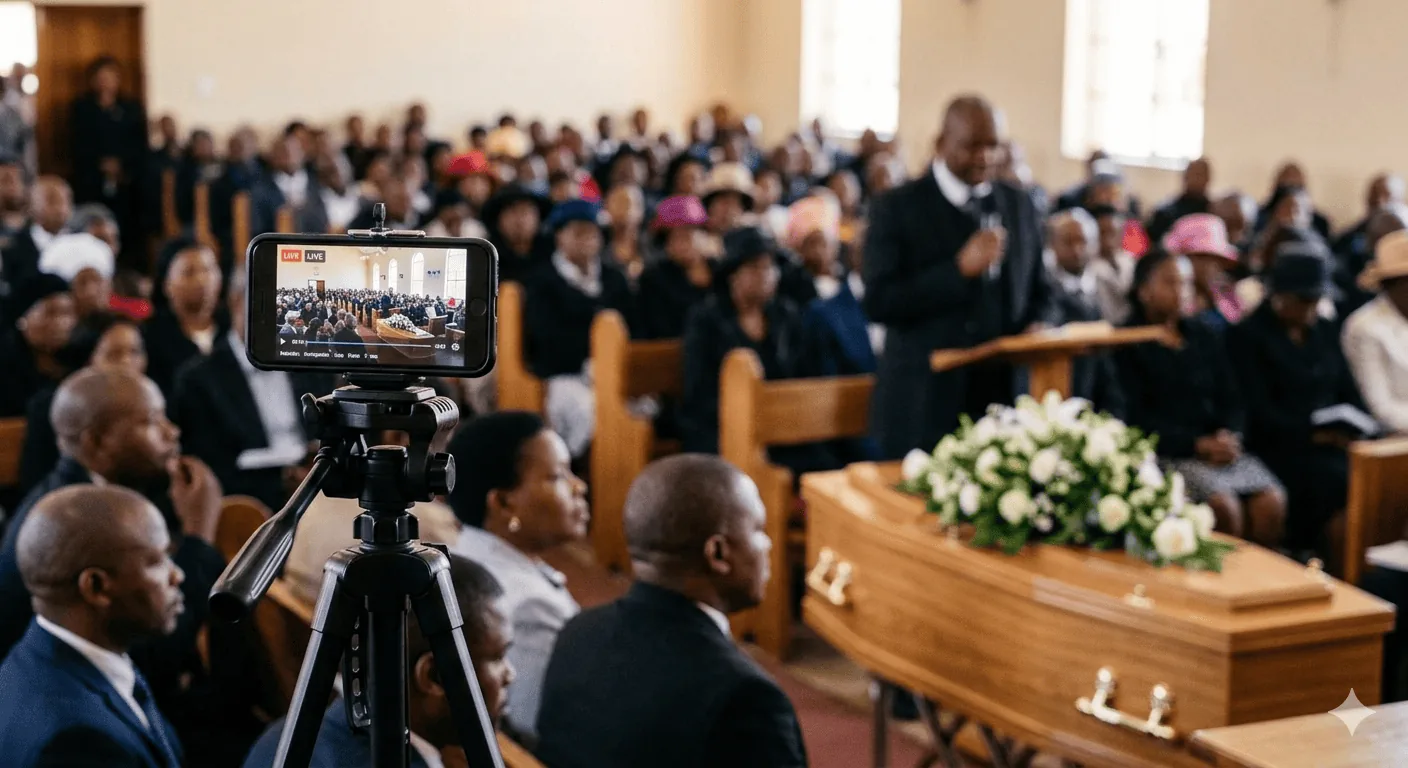
Many funeral homes and churches in South Africa now offer livestreaming as a standard service. If your venue does not, a simple smartphone on a tripod with a stable mobile data connection can work. Share the livestream link on the tribute page before the service begins so people do not have to search through chat history for it. If you need help planning that side, see our guide on how to live stream a funeral service. Test the connection at least 30 minutes before the service is scheduled to start.
Read Messages from Absent Family
Ask distant family members to send tributes, prayers, or memories in advance. These can be read aloud during the service by the MC or a family member. This makes the absent person's voice part of the ceremony — a deeply meaningful gesture.
Record and Share the Service
Not everyone will be available at the exact time of the service, especially family in different time zones. Record the service (or ask the funeral home to do so) and upload the recording to the tribute page afterwards. This gives distant relatives the chance to experience the service in their own time.
Virtual Candle Lighting
TributePoint's memorial pages include a candle-lighting feature where visitors can light a virtual candle and leave a dedication. This simple act gives distant relatives a way to participate symbolically, regardless of where they are.
Step 4: Collect Memories from Everyone
A tribute page works best when it is not just a one-way announcement — it is a shared space where family and friends contribute. Encourage distant relatives to:
- Write a condolence message or a favourite memory on the tribute page
- Send photos of the deceased that can be added to the gallery
- Share a voice note or video message that can be played at the service or kept for the family
The more contributions a tribute receives, the richer and more valuable it becomes — not just today, but for future generations who will want to understand who this person was.
Appoint one family member as the "tribute coordinator" — the person who manages the page, adds photos, and reminds relatives to contribute. This avoids duplication and ensures nothing gets lost in the many WhatsApp groups and conversations happening simultaneously.

Step 5: Keep the Tribute Alive After the Funeral
The funeral is one day. The memory is forever. After the service, the tribute page continues to serve an important purpose:
- Anniversary remembrances — Share the link again on birthdays, death anniversaries, or significant dates. It becomes the family's permanent place of remembrance.
- New memories — Family members may want to add stories or photos they find later. A tribute page that stays online welcomes these contributions at any time.
- Genealogy — For future generations researching family history, a detailed tribute page with dates, photos, and personal stories is an invaluable resource.
Unlike a social media post that gets buried in the feed, a dedicated memorial page remains accessible and searchable — a permanent digital headstone that anyone in the family can visit.
Common Mistakes to Avoid
When sharing a tribute with distant family, a few pitfalls are worth avoiding:
- Sharing the news publicly before close family knows — Always inform immediate family first, by phone if possible, before posting anything online. Not everyone checks WhatsApp or Facebook immediately.
- Overloading groups with messages — Share the link once with a clear, concise message. Avoid sending multiple updates unless there is a significant change (e.g., venue or time changes).
- Forgetting offline family — Not all relatives are online. Make phone calls and send SMS messages to elderly relatives or those in areas with limited connectivity.
- Neglecting privacy — If the family prefers privacy, share the tribute only in private groups and direct messages rather than public social media posts. Discuss this with the family before sharing widely.
- Letting the page go stale — After the funeral, add any remaining photos, the recording of the service, and final thank-you messages. This closes the loop for distant relatives who could not attend.
A Practical Sharing Checklist
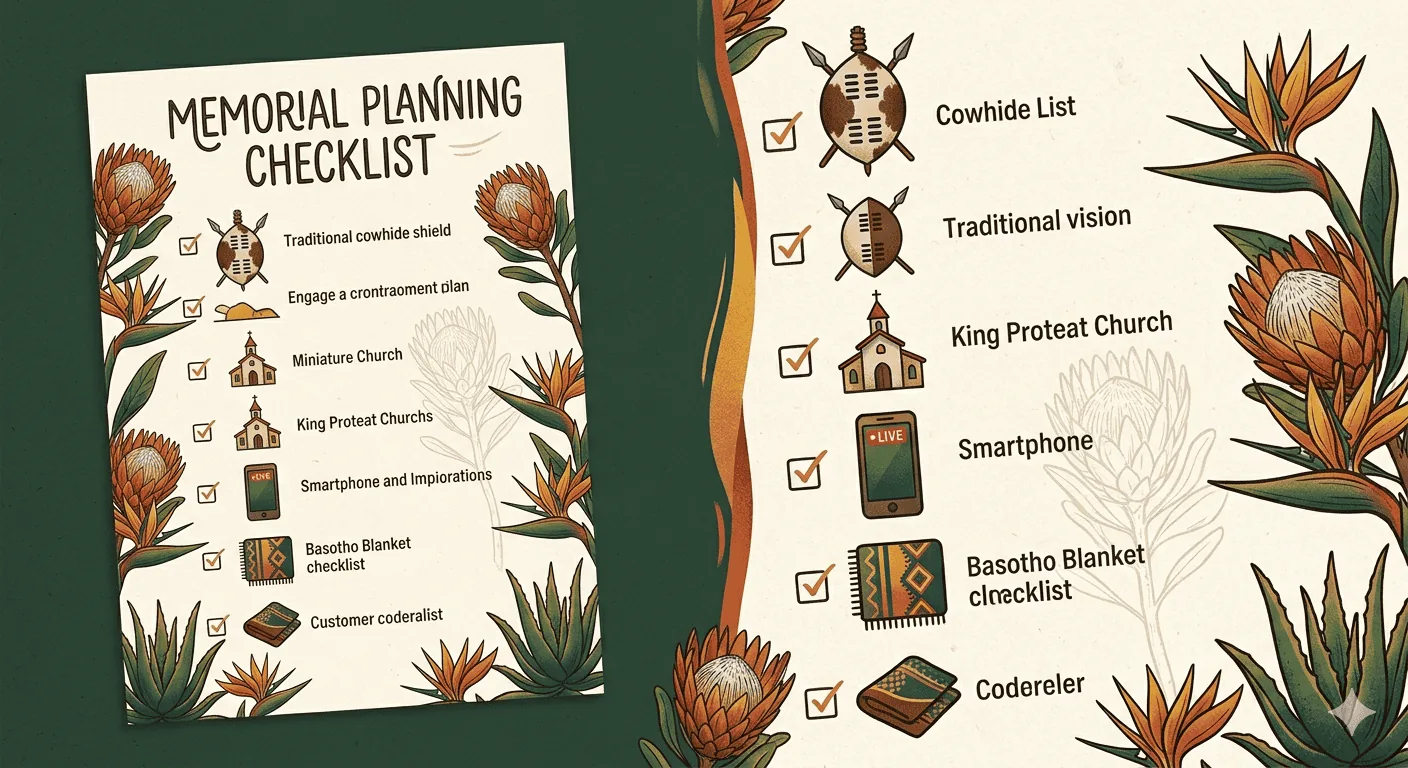
Here is a quick step-by-step checklist you can follow when a loved one passes:
- Inform immediate family by phone
- Create a tribute page on TributePoint with the essential details
- Share the tribute link in the family WhatsApp group(s)
- Post in private Facebook family group (if applicable)
- Email the tribute link to relatives who prefer email
- SMS or call elderly or offline relatives with funeral details
- Ask distant family to send tributes, photos, or messages to include in the service
- Share the livestream link before the service begins
- After the funeral, update the page with service photos and recordings
- Share the link again on significant anniversaries
Final Thoughts
Distance should never prevent someone from saying goodbye. With a well-built tribute page and a thoughtful sharing strategy, you can ensure every member of your family — whether in the next room or on the other side of the world — has the chance to grieve, remember, and celebrate the life of someone they love.
A memorial page is helpful here because it gives the family one place to update, one place to share, and one place for distant relatives to return to after the funeral has ended.
Use One Link for the Whole Week
If relatives are spread across provinces and countries, a tribute page gives you one place to keep the obituary, updates, QR access, and livestream together.
Create a Tribute Page
Ayesha Daniels is a Family Support Writer at TributePoint. She covers grief, remembrance, and the ways families can stay connected and supported before, during, and after a funeral.
Also helpful: If you plan to put the memorial link on printed programmes or signage at the venue, our guide to funeral QR codes shows how families usually do that without confusion.