When a loved one passes away, families face the enormous task of notifying people, sharing funeral details, and honouring the person who has died — all at the same time. A digital memorial page is a modern, dignified solution that helps families do all of this in one place. This guide explains what it is, what it includes, and why South African families are choosing online tributes.
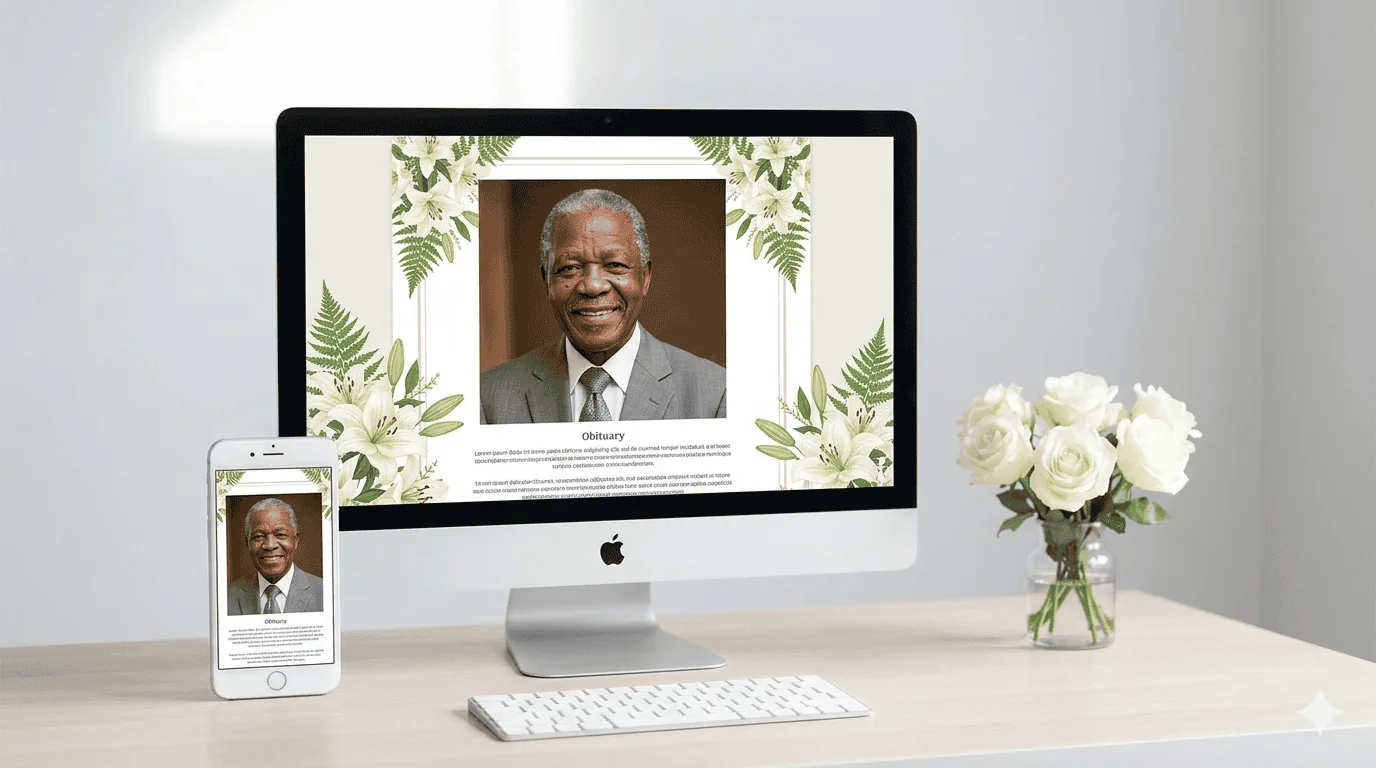
What is a Digital Memorial Page?
A digital memorial page — also called an online tribute page or digital obituary — is a dedicated webpage created in memory of someone who has passed away. It serves as a central, permanent record of that person's life: their story, their photos, their funeral details, and the legacy they leave behind.
Unlike a Facebook post or a WhatsApp message, a memorial page is designed specifically for remembrance. It has a clean, respectful layout, a permanent web address, and the ability to hold far more content than any social media post ever could. Once created, it can be visited at any time — today, next year, or a decade from now.
How a Digital Memorial Differs from Social Media
Many families first reach for social media when someone passes away — posting on Facebook, sharing on WhatsApp, or sending an email to a contact list. These are natural, immediate responses. But they have real limitations:
- Social media posts get buried. Within hours, a post on Facebook is pushed down by other content. People who see it a week later may miss the funeral date entirely.
- Information gets lost. Important details — the funeral home address, the service time, the cemetery — are easily missed in a long post, or require scrolling through dozens of comments to find again.
- Privacy is limited. Social media posts can be seen by people outside your intended audience, liked or shared unexpectedly, and are subject to platform algorithms.
- They are not permanent. Social media accounts are deleted, suspended, or simply abandoned. A dedicated memorial page with its own URL remains accessible indefinitely.
- They do not honour the person. A funeral announcement on social media feels like a notification. A tribute page feels like a memorial.
A digital memorial page solves all of these problems. It is the single, trusted, always-accessible place for everything related to a loved one's passing and life.
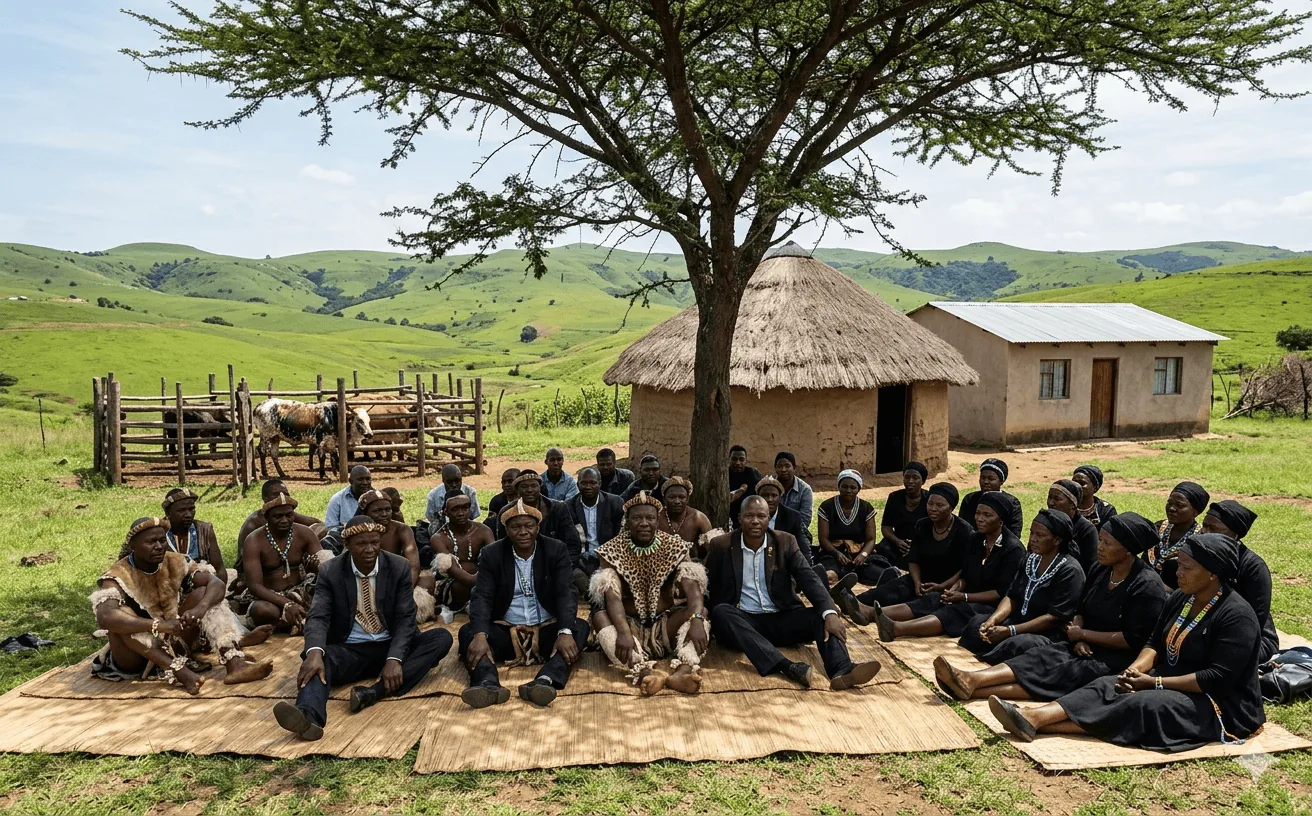
What Can You Include in a Digital Memorial Page?
A well-built memorial page on TributePoint can include all of the following:
Full Biography & Obituary
Write the full life story — birth, upbringing, career, family, faith, and character — in your own words.
Funeral Service Details
Date, time, venue, and location with an interactive map — everything mourners need to attend or plan their journey.
Photo Gallery
Upload a portrait photo and a full photo gallery — family moments, milestones, and memories that bring the person to life.
Donation Link
Share a link for family contributions to funeral costs or a chosen cause — making it easy for people to help.
Funeral Programme
Upload a PDF of the funeral programme so family who cannot attend can follow along from anywhere.
Beautiful Theme
Choose from memorial-inspired themes that reflect dignity — each one designed for the weight of remembrance.
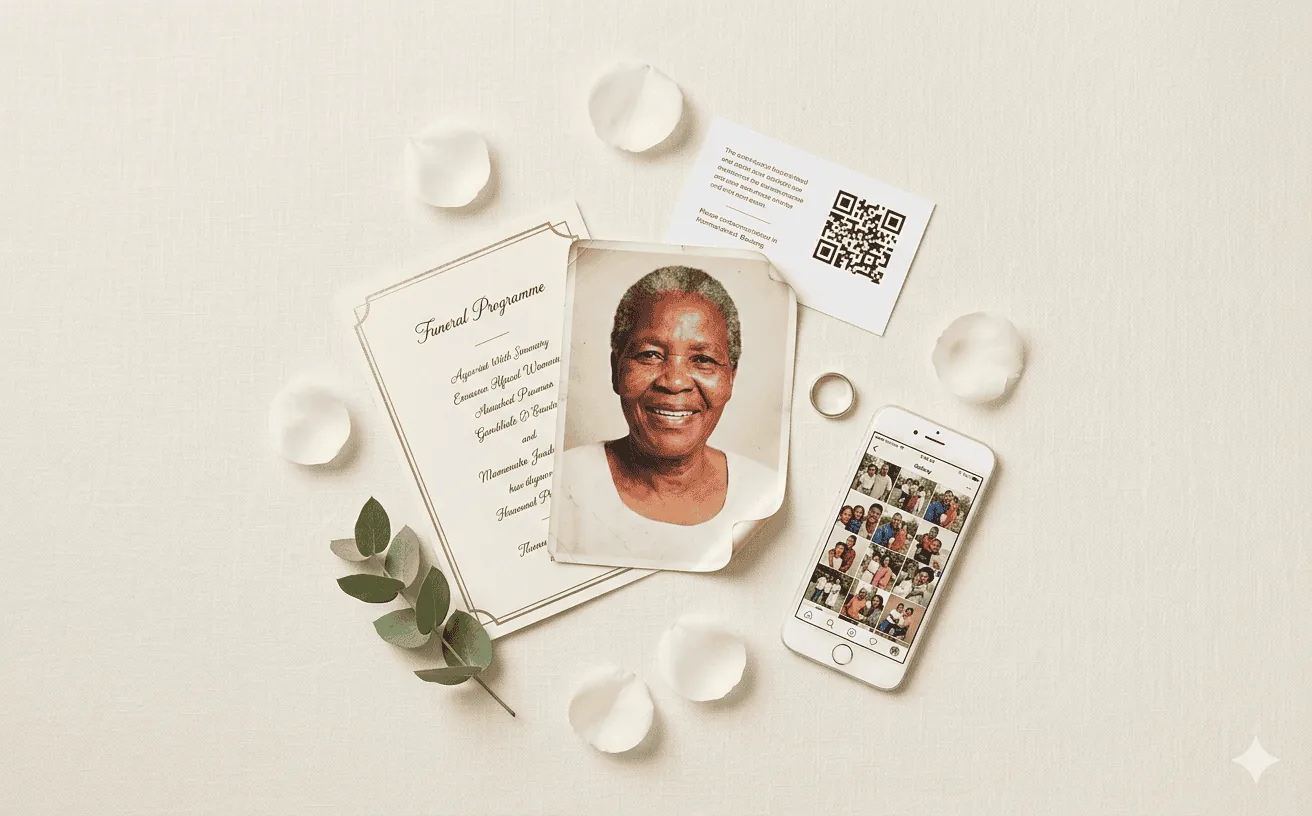
Who Can See the Memorial Page?
You are in complete control of who can view the tribute. On TributePoint, you can set a tribute as private — visible only to people you share the link with — or public, allowing it to appear in search results and be found by anyone who searches the person's name.
Most families choose to keep tributes private during the planning phase, then make them public once the obituary is complete and the funeral details are confirmed. Some families keep tributes private permanently, preferring to share only with family and close friends via a direct link on WhatsApp or email.
On TributePoint, private tributes are never indexed by search engines and are never shown to the public. Only people with the exact link you share can access them. You can change the visibility setting at any time.
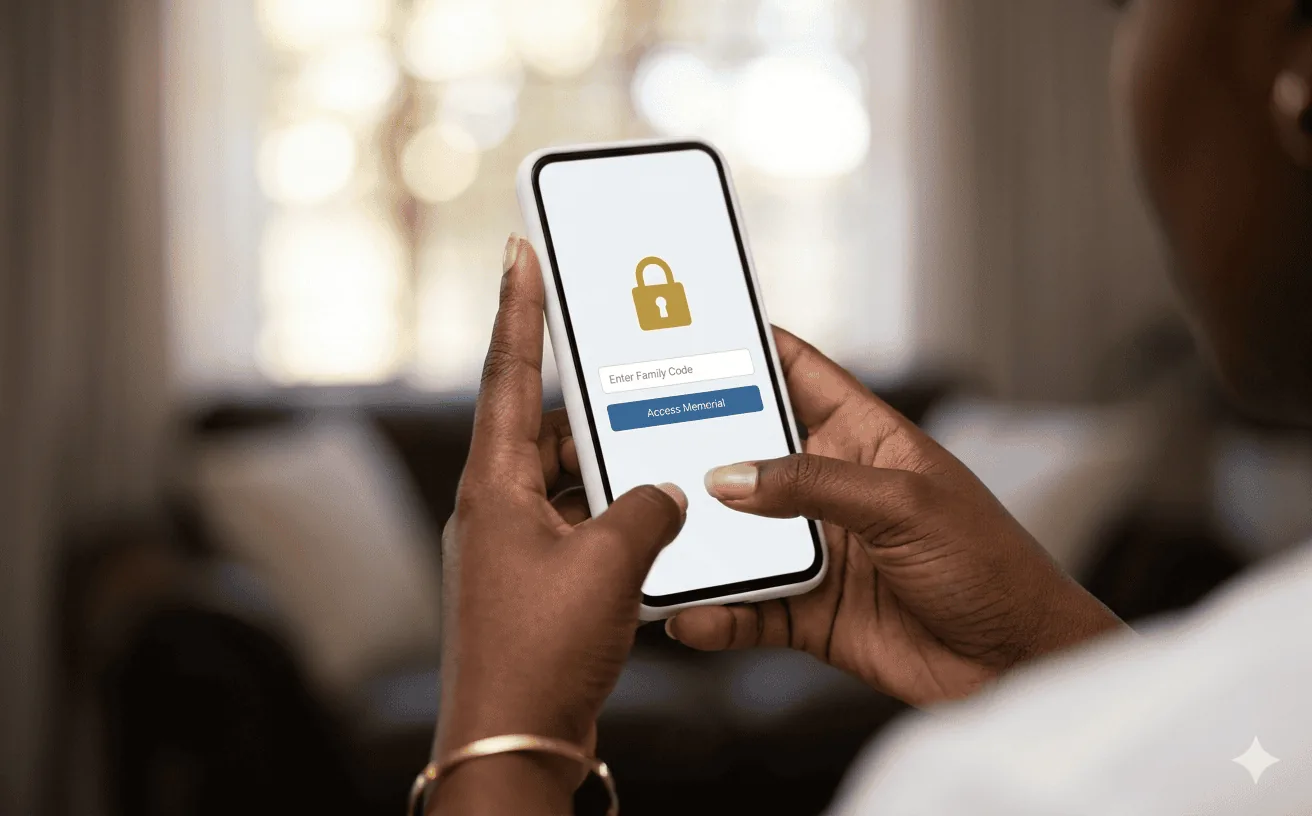
Why South African Families Choose Digital Memorials
South Africa is a country of movement. Families are spread across provinces, across cities, and increasingly across borders. Children work in Johannesburg while parents live in the Eastern Cape. Siblings are in Cape Town, Durban, and Limpopo. Extended family may be in neighbouring countries or overseas entirely.
A digital memorial page means that every family member — regardless of where they are — can access the same information at the same time. Someone in London can read the full obituary, view the photos, see the funeral programme, and feel connected to the ceremony even if they cannot be there in person. That connection matters deeply during grief.
There is also a practical cost factor. Newspaper death notices in South Africa can cost hundreds of rands for a single publication, and the notice typically runs for one day only. A digital memorial page on TributePoint is completely free, permanently accessible, and reaches anyone in the world with an internet connection.
The Long-Term Value of an Online Tribute
Many families are surprised to discover how valuable a memorial page becomes years after the funeral. Children who were too young to understand the loss at the time return to the page when they are older and want to learn about the grandparent or great-grandparent they barely knew. The obituary becomes a piece of family history. The photos become treasures.
This is one of the most important differences between a social media post and a proper memorial page: the social media post will eventually disappear, but the memorial page, by design, is built to last.
Create a Free Digital Memorial on TributePoint
Whether you're preparing for an upcoming funeral or honouring someone who passed long ago, you can create a beautiful, permanent memorial in minutes — for free.
TributePoint is South Africa's free digital obituary platform. Build a beautiful, lasting memorial page in minutes — share it on WhatsApp, email, or print it on funeral programmes.
Getting Started with TributePoint
Creating a tribute page on TributePoint takes less time than you might expect. You start by entering the person's name and a few key details, then build the page out as you have time and information available. You do not need to complete everything in one session — save your progress and return whenever you are ready.
Once you are satisfied with the content, you share a single link. That link can be sent on WhatsApp, included in a text message, shared by email, or even printed as a QR code on the funeral programme. Everyone who opens it sees the same, complete, respectfully designed memorial — on any device, at any time.
TributePoint is free for all South African families. There are no hidden fees, no time limits, and no need to create an account just to view a tribute someone has shared with you.
How a Digital Memorial Compares to Other Notification Methods (Real Costs)
One of the questions South African families ask most often is whether a digital tribute really replaces the things they have always done — the newspaper notice, the printed pamphlet, the WhatsApp broadcast. The honest answer from working with hundreds of families is: it does not replace them entirely, but it solves problems each of those methods leaves behind. Below is a realistic comparison based on 2026 South African pricing.
- Newspaper death notice (Sowetan, Daily Sun, Herald, Witness): R450–R1,800 for a single 50–100 word notice on one day. Most readers miss it because they did not buy that day’s paper. The notice cannot be updated if the venue changes.
- Printed funeral programme: R600–R3,500 for 100–500 copies. Beautiful and important, but only the people who attend the service ever see it. Family in the UK or Australia receive nothing.
- WhatsApp broadcast list: Free, but the message gets edited as it is forwarded. Within a day, the family is fielding calls about three different funeral times because someone in the group typed “14h00” while the original said “12h00”.
- Phone calls to relatives: Emotionally exhausting. Families repeat the same painful information dozens of times. Calls to mobile data clients (RICA-registered networks) cost R0.79–R1.50 per minute — reaching 30 relatives can easily cost R200 in airtime alone.
- TributePoint digital memorial page: Free, permanent, instantly updatable, viewable on any phone with even a 2G internet connection, and accessible to anyone you share the link with — from a cousin in Khayelitsha to a colleague in Saudi Arabia.
Most families end up using a combination: the digital memorial as the central source of truth, the printed programme for the service itself, and a short WhatsApp message that simply says “Please open the link below for full details.” That single sentence stops the chain of misinformation that almost every family struggles with.
How South African Burial Societies and Churches Use Memorial Pages
In our experience helping families across Gauteng, KwaZulu-Natal, Limpopo and the Eastern Cape, two community structures shape how digital memorials are actually used: burial societies (masingcwabisane) and church groups (umanyano, sodalities, prayer leagues). Understanding how these groups already work helps families integrate a tribute page in a way that respects existing customs.
Burial societies and stokvels
Most South African burial societies require formal notification of a death within 24–48 hours so the secretary can convene members and release the agreed contribution. The page link is usually shared in the society’s WhatsApp group together with a screenshot of the deceased’s ID. The fact that the page contains the obituary, photo, and the funeral programme means the secretary does not have to chase the family for information at the worst possible moment — everything is already there.
Church groups and umkhuleko
For families belonging to ZCC, Methodist, Anglican, Catholic, NG Kerk, Apostolic and Pentecostal churches, the prayer league or sodality typically begins nightly umkhuleko (prayer service) at the family home from the day after the death until the funeral. Members are expected to attend and contribute — food, candles, sometimes money. Sharing the memorial page early lets faraway members of the same congregation participate spiritually even when they cannot drive through.
Common Mistakes Families Make (and How to Avoid Them)
These are the patterns we see again and again. None of them are catastrophic, but recognising them early saves a lot of stress.
- Waiting until the obituary is “perfect” before publishing the page. The page can go live with just a name, a photo, the funeral date and venue — people need that information now. The full life story can be added over the following days as more family contribute memories.
- Choosing a photo at random. The portrait photo on the memorial is the image people will associate with the deceased forever. Take an extra hour to find one where their personality comes through — a smile, a familiar pose, a moment that family members recognise immediately.
- Forgetting to update the page after the funeral. The memorial does not stop being useful once the burial is over. Add a thank-you note, photographs from the service for family who could not attend, the date of the umbuyiso/unveiling ceremony when it is set.
- Making the page private and forgetting who has the link. If the page is private, keep one shared family WhatsApp group as the central place where the link lives, so any relative who deletes the message can find it again.
- Listing only the immediate family. South African families are wide. Include grandparents, in-laws, cousins who were like siblings, godparents, and the people who raised the deceased — not only the legal family tree.
A Real Scenario: How One Gauteng Family Used a Memorial Page
Consider how an East Rand family used a TributePoint page after losing their grandfather, a retired Transnet employee originally from Bushbuckridge. The death happened on a Wednesday evening at Tembisa Hospital. By Thursday morning, his daughter had created a basic memorial with his name, ID photo, and a holding message that read “Funeral details to follow shortly. Please share this link with anyone who needs to know.”
Over the next two days, the page was updated as decisions were made: the funeral home was confirmed (a small operator in Daveyton), the body would be repatriated to Limpopo for burial near his ancestors, the service would be held on the Saturday morning at the family kraal. Family in Johannesburg, Polokwane, Bushbuckridge, and three relatives in the UK all received the same evolving information from one link.
The grandfather’s burial society in Tembisa used the page to confirm member contributions. The Methodist class leader at his old congregation used the page to organise prayer meetings. A second-cousin in Birmingham used the page to send a heartfelt voice message that was played at the service. Six months later, when the family arranged the tombstone unveiling, they updated the same page with the new date — and everyone who had the original link knew immediately.
That is what a digital memorial does well: it grows with the family, instead of disappearing the moment the funeral ends.
Frequently Asked Questions
Is a digital memorial page legal in South Africa? Does it replace the death certificate?
A digital memorial page is not a legal document and does not replace the official Death Certificate (BI-1663) issued by the Department of Home Affairs. It is a private commemorative website. For the legal steps that do need to be taken, see our guide on what to do when someone dies in South Africa.
Can I add a livestream link to the memorial page?
Yes. If the funeral will be livestreamed for family who cannot attend, the link can be added to the memorial page so everyone has one place to find it. Read our practical guide on how to live stream a funeral service in South Africa for setup options that work on rural data connections.
How long does the memorial page stay online?
TributePoint memorial pages are kept online indefinitely at no cost. The page becomes part of your family’s digital legacy — available years later for grandchildren, descendants, and anyone researching family history.
What if family members want to contribute their own memories?
TributePoint pages support virtual candles, condolence messages, and a guestbook so visitors can leave their own tribute. See how virtual candles and condolences work for the full feature breakdown.
Can I include the deceased’s favourite music or a video?
Yes. Pages can include audio clips, embedded video tributes, and a slideshow gallery. Many families upload a recording of the deceased’s favourite hymn or a video of a recent family gathering as a way of preserving their voice and presence.

Ayesha Daniels is a Family Support Writer at TributePoint. She covers grief, remembrance, and the ways families can stay connected and supported before, during, and after a funeral.
Also helpful: Create a free funeral tribute for an upcoming service, or a Legacy Memorial Page for a loved one who passed long ago. For more practical support, see our South African funeral guides.