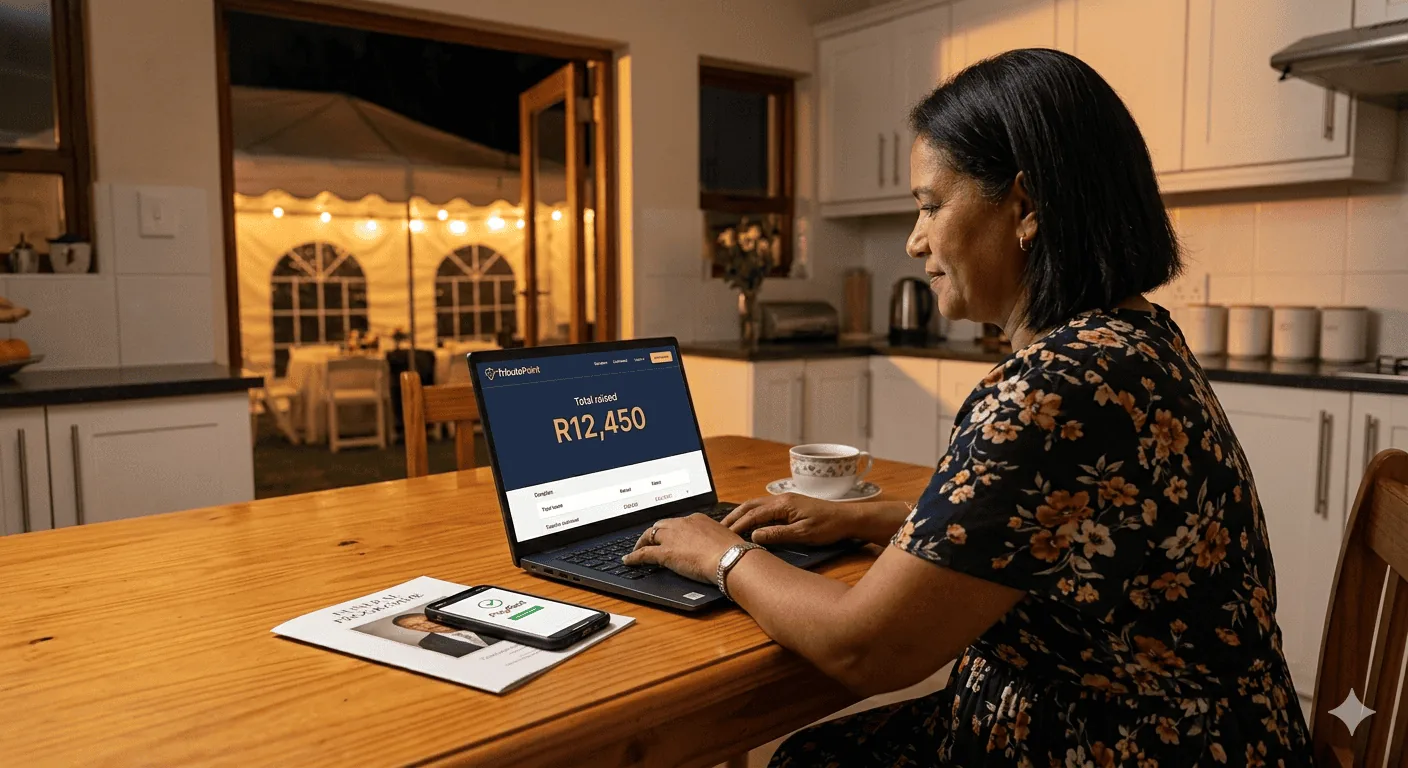
A death often brings immediate expenses before the family has had time to think clearly. A church group may want to help with groceries, a burial society may cover part of the cost, and relatives in different WhatsApp groups may all ask the same question: “How can we contribute?” This guide looks at funeral donations from that real moment first, then explains how an online tribute page can help collect support more clearly and respectfully.
The Cost of a Funeral in South Africa
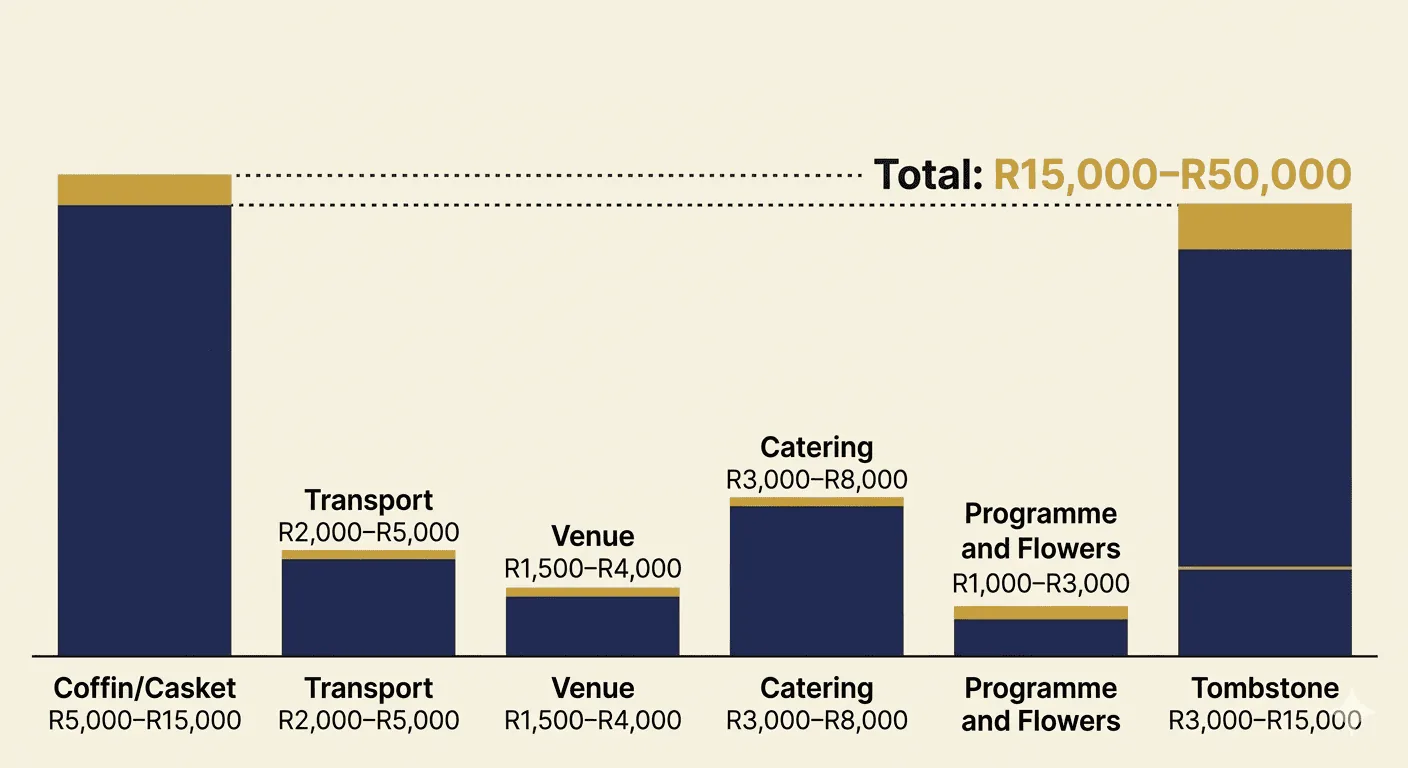
According to industry estimates, the average funeral in South Africa costs between R15,000 and R50,000, depending on the province, customs, and choices the family makes. For many families, this is a devastating expense that arrives without warning. Our guide to funeral costs in South Africa breaks down why the total can rise so quickly.
Funeral policies help, but they rarely cover everything. That is where community contributions make a real difference. In many South African cultures, neighbours, church members, and colleagues pool money to support the bereaved family — a tradition of collective care called ubuntu.
When Donations Are Appropriate and Respectful
Donations are usually most appropriate when the family has a genuine financial need, when relatives are asking how to help, or when the wider community would naturally contribute anyway. That might mean a church women’s group helping with food, a burial society covering part of the funeral, or work colleagues sending support from another province.
What matters is tone. A donation request should feel like an invitation to assist, not public pressure. It helps to explain briefly what the contributions will support — funeral transport, catering, the programme, or general funeral costs — and to share the link in places where support would naturally come from, such as family WhatsApp groups, church groups, or community associations.
If the family is financially stable and would prefer privacy, it is perfectly acceptable not to ask for donations at all. A tribute page can still be used just for the obituary, funeral details, and messages of support.
How Online Donations Work on TributePoint
TributePoint integrates with PayFast, a widely used South African payment gateway. When a visitor clicks the donation button on a tribute page, they are guided through a secure checkout — no TributePoint account required. That means the family can keep one clear link for the obituary, funeral details, and contributions instead of forwarding bank details repeatedly in different chats.
Step-by-Step: Setting Up Donations
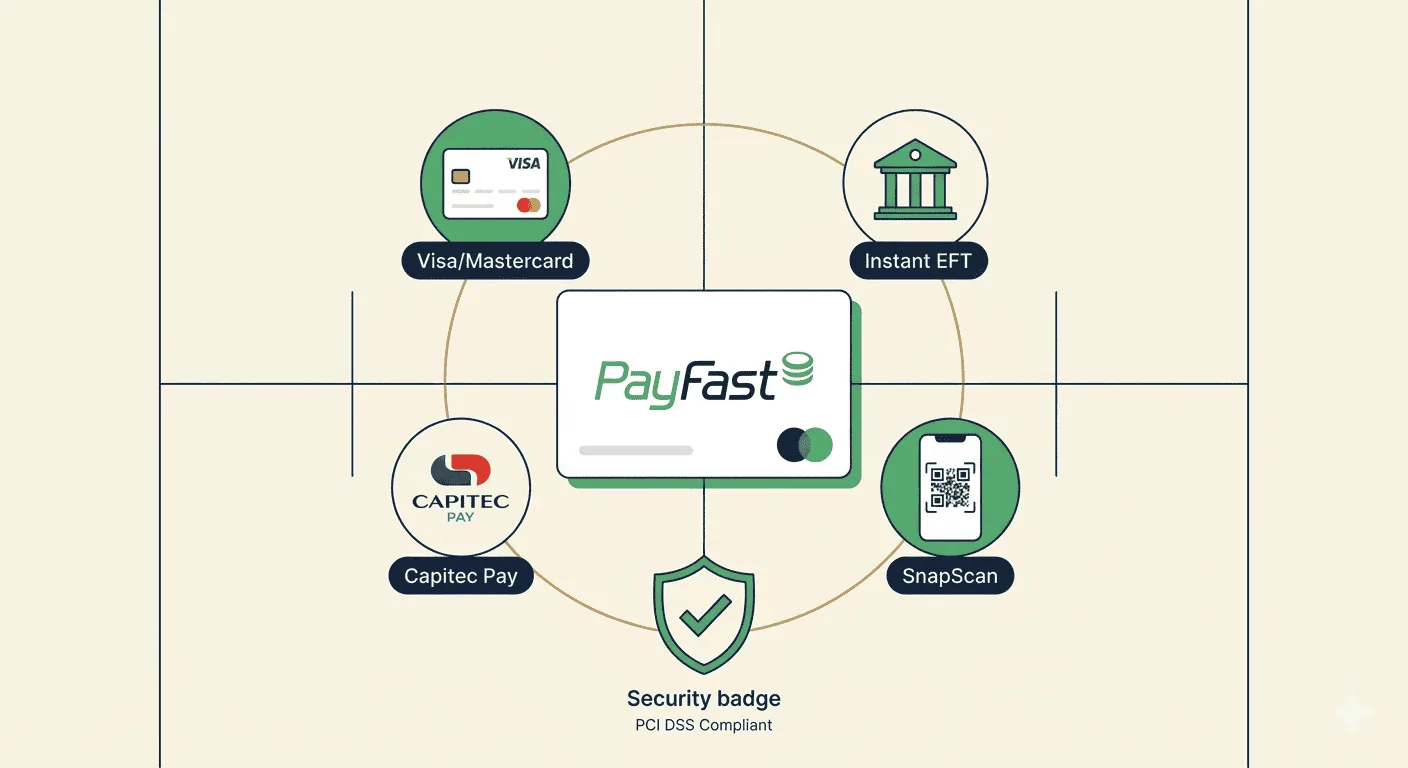
- Open the tribute editor and navigate to the Donations tab. Toggle donations on.
- Enter the family’s payout details: full legal name, SA ID number, phone number, bank name, account type, account number, and branch code.
- Save the settings. The donation button now appears on the public tribute page.
- Share the tribute link via WhatsApp, SMS, or social media. Contributors click the donate button and pay through PayFast.
- Track donations in the editor — every contribution shows amount, date, and donor name.
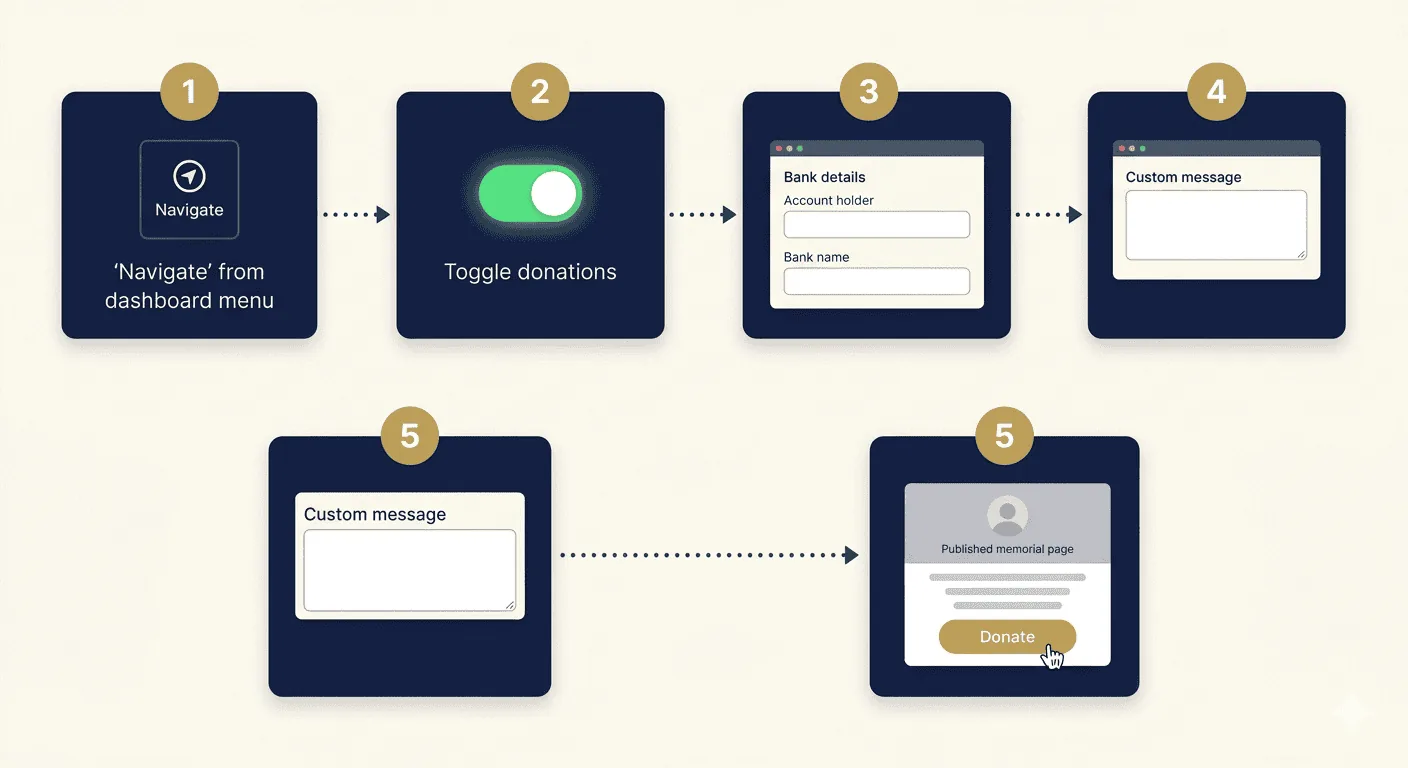
All payments are processed by PayFast using PCI DSS Level 1 compliance. TributePoint never stores card numbers. The family’s banking details are stored securely and used only for payout purposes.
The Donation Experience for Visitors
When a community member visits the tribute page, they see a “Contribute” button. Clicking it opens the payment flow:
- Choose an amount (or enter a custom one)
- Select a payment method — card, EFT, SnapScan, or others
- Complete the payment on PayFast’s secure page
- See a thank-you page confirming the donation
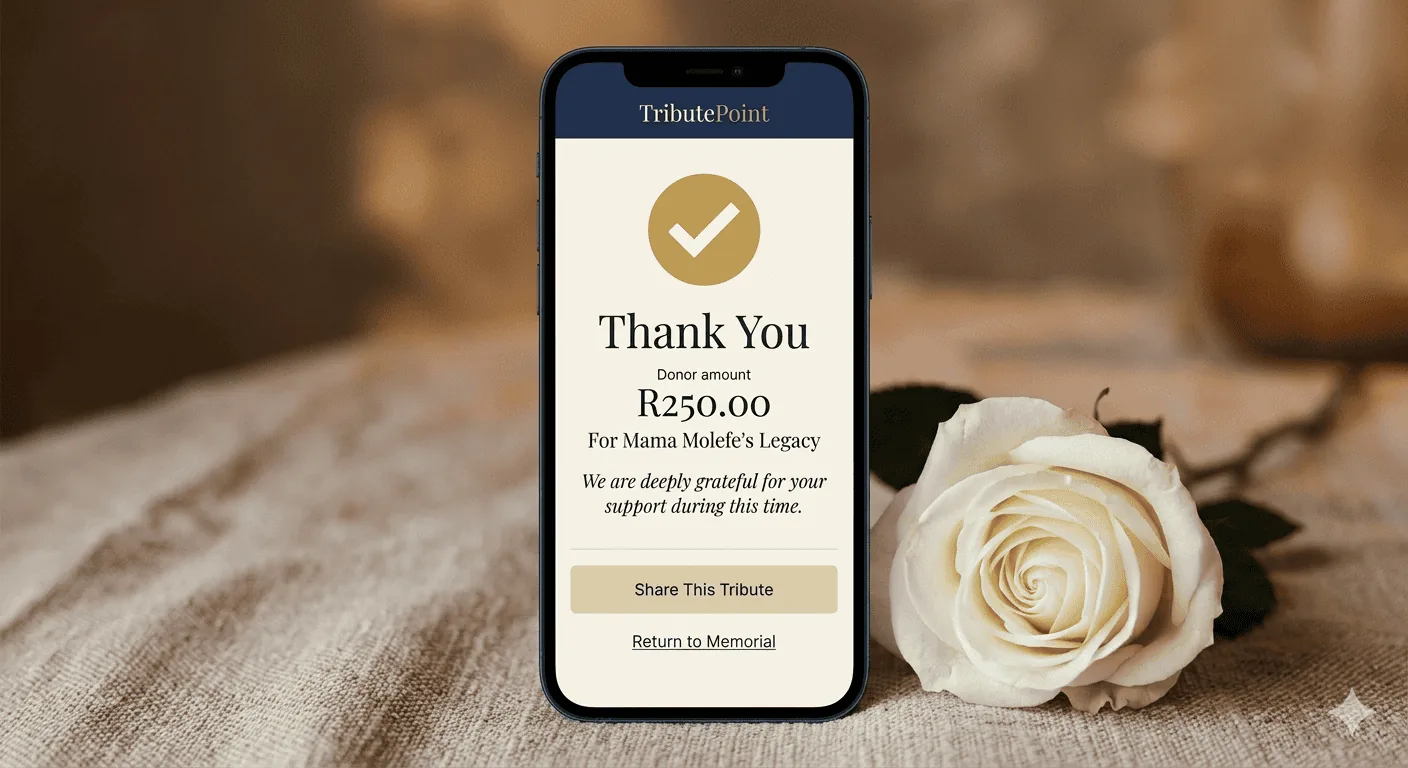
After the payment, the visitor can share the donation receipt via WhatsApp — a simple tap sends a message to the family confirming the amount. This is especially helpful when support is moving through several family or church groups at once and people want reassurance that the contribution landed where it was meant to.
Tracking Donations
The tribute editor includes a donation history panel showing every contribution:
- Donor name (as provided during payment)
- Amount in Rands
- Date and time
- Total raised and number of donors at the top
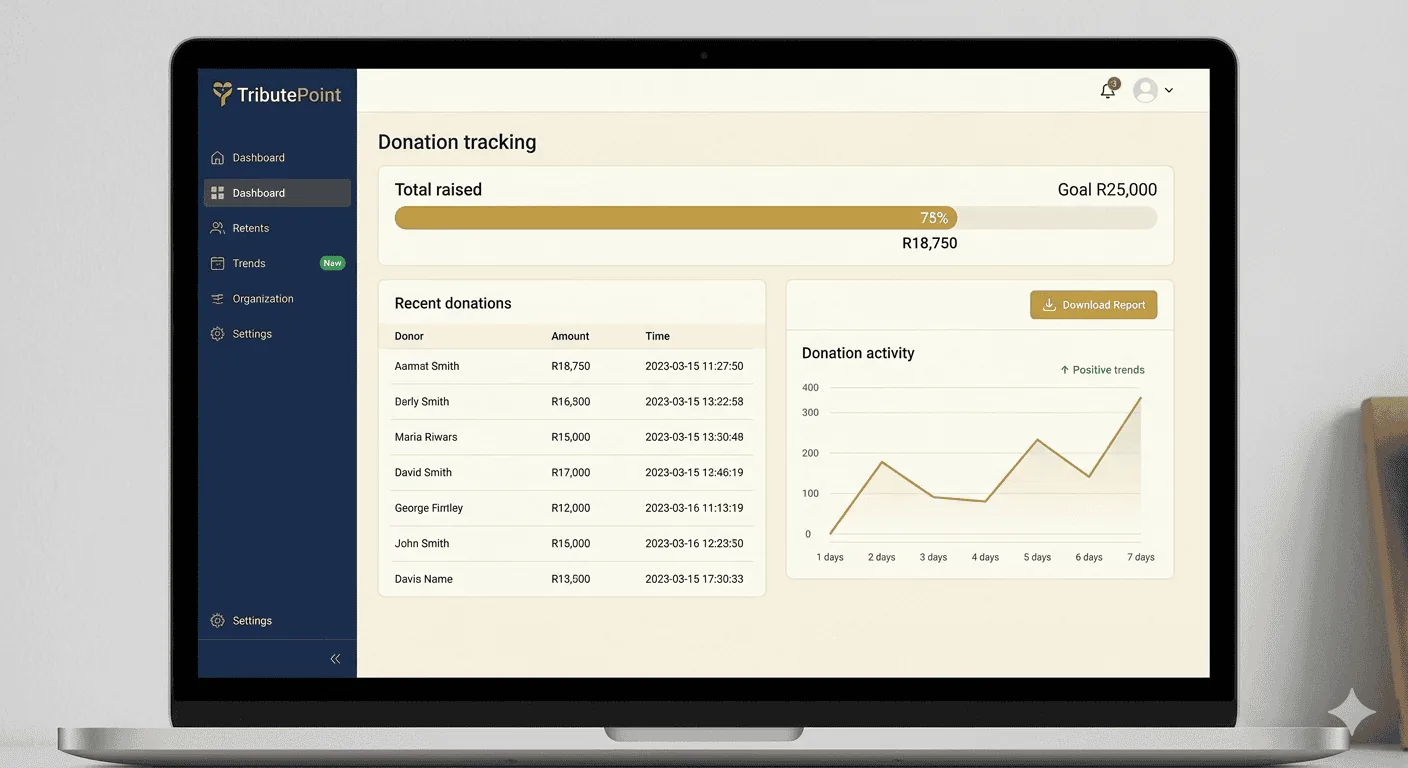
This transparency is important. Families can see exactly how much has been raised and who contributed, which helps with thank-you messages and record-keeping.
Family Payout Details
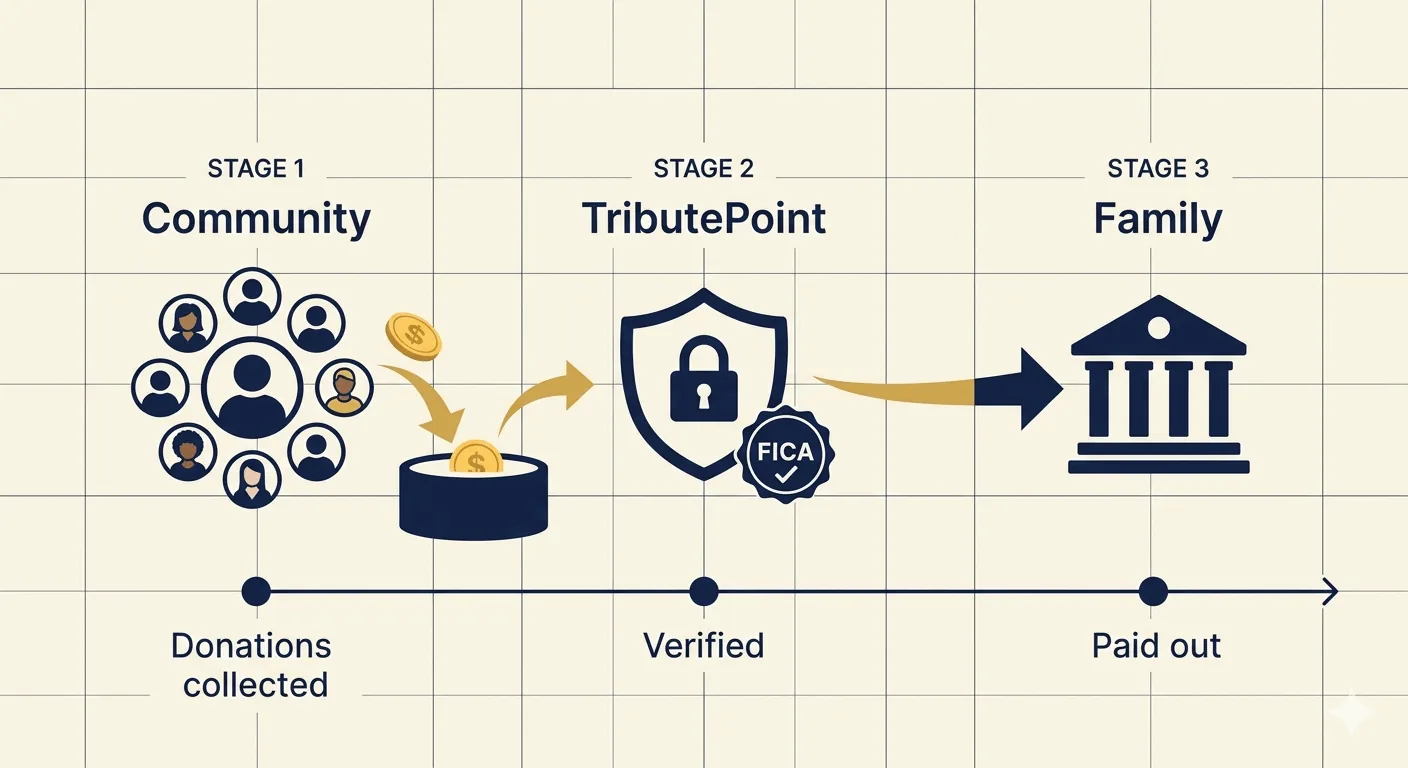
To receive funds, the family provides:
Identity Verification
Full legal name and South African ID number — required by FICA regulations for financial transactions.
Contact Details
A cellphone number for communication about the payout.
Banking Information
Bank name, account type (savings/cheque), account number, and branch code for the funds transfer.
Admin Controls
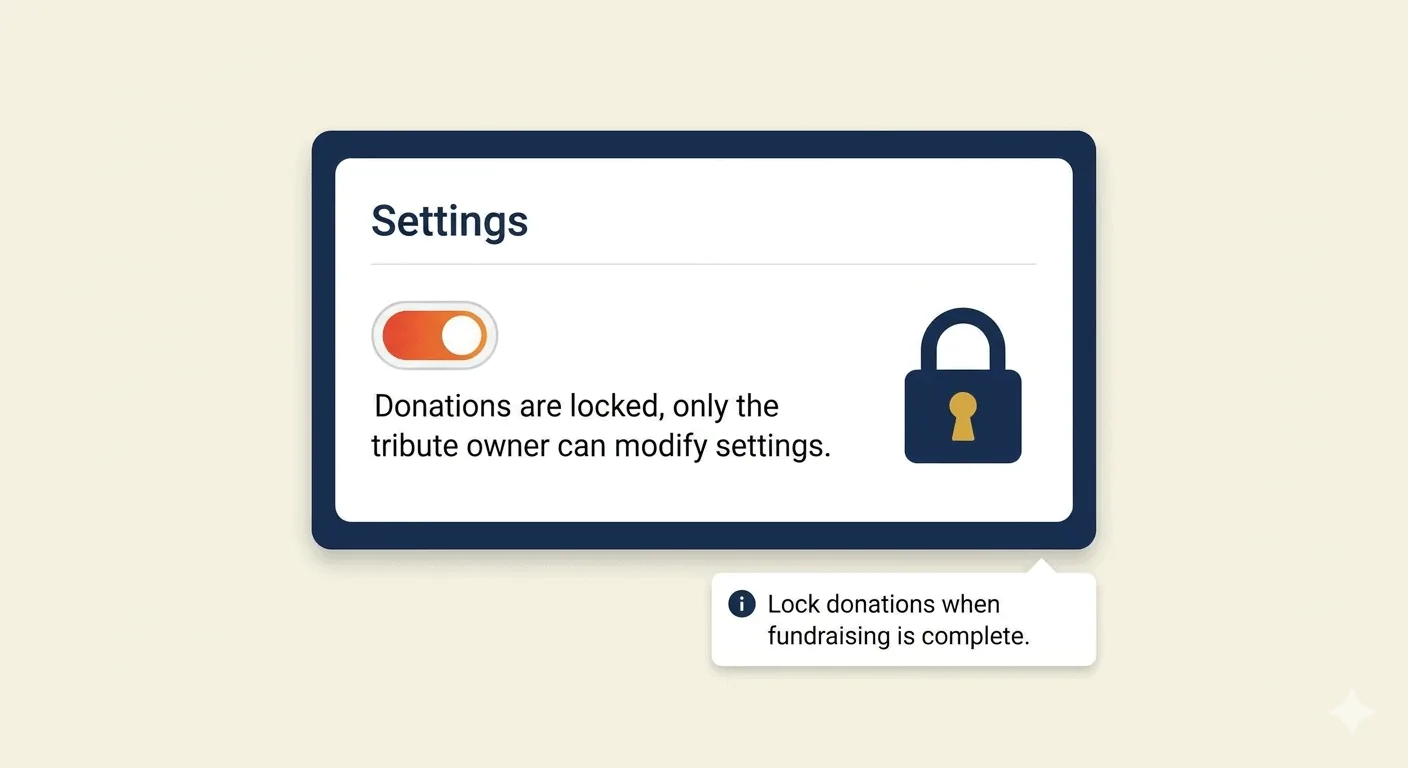
TributePoint includes an admin lock on the donation toggle. This prevents accidental disabling of donations while they are actively being collected. Only the tribute owner or a company admin can override this lock.
Share the tribute link in WhatsApp groups — church groups, stokvels, work colleagues, and family groups. South Africans donate most generously when the link comes from someone they know personally.
Why Not Just Use a Bank Account Number?
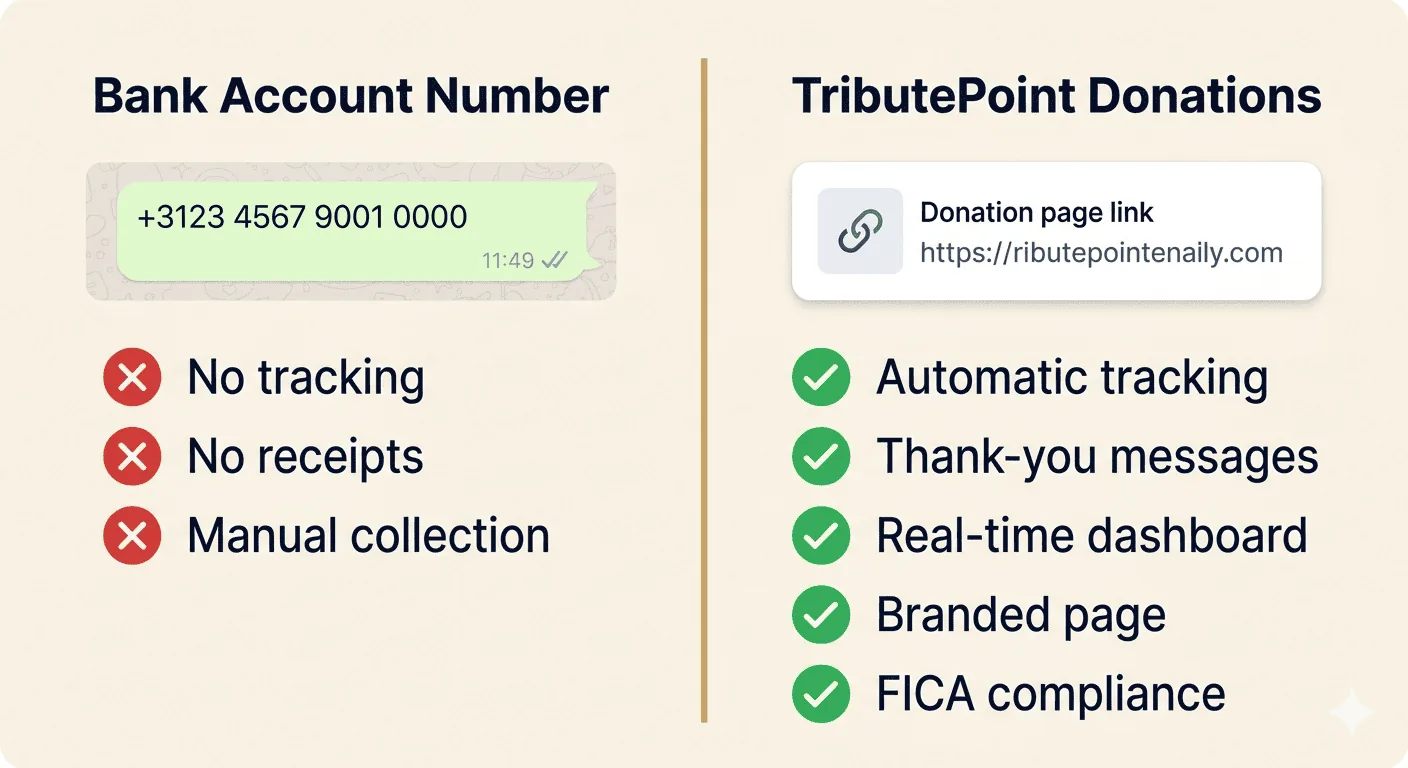
Sharing a raw bank account number in a WhatsApp group has risks:
- No tracking — you cannot tell who deposited what amount
- No receipts — donors have no confirmation
- Fraud risk — scammers can re-share the number with a different name
- Delayed clearing — EFT deposits can take 1–3 days to appear
PayFast through TributePoint solves all of these. Every donation is tracked, receipted, and linked to the specific tribute — with instant confirmation for both the donor and the family.
The Role of Stokvels and Burial Societies
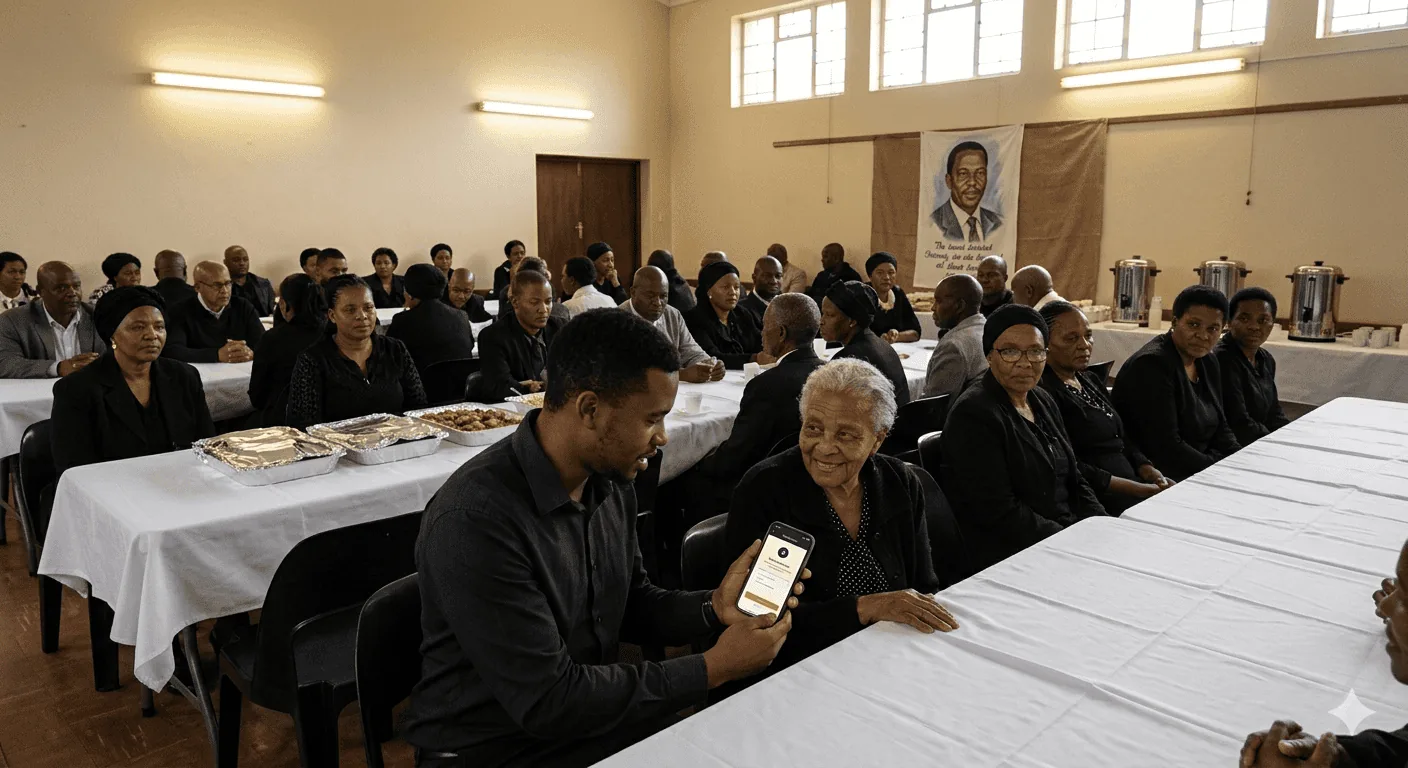
South Africans have been pooling money for funerals long before anyone had a smartphone. Stokvels — community savings clubs where everyone puts in the same amount each month — have been around for over a century. The National Stokvel Association of South Africa (NASASA) reckons about 11 million South Africans belong to one, and burial societies are one of the most common types.
When a member dies, the burial society typically pays out between R5,000 and R30,000. But it is not just money. The women organise cooking teams for the night vigil and the funeral. Someone arranges transport if the body needs to be moved from Joburg back to the rural homestead. Others help dig the grave. This is ubuntu in action — your grief is my grief, your burden is my burden.
But here is the reality: a R15,000 burial society payout often does not cover a funeral that costs R35,000 or more. That is where online donations come in. Colleagues at work, church friends, that cousin in Durban who cannot make it to the service — they all want to help, they just need a way to do it. They are not part of the burial society, but they still care.
Tax and Record-Keeping: General Guidance
Funeral donations are often treated like personal gifts between individuals, but the details can depend on where the money comes from and how it is structured. If a family is receiving ordinary support from friends, church members, or relatives, there is usually nothing complicated to do beyond keeping a simple record of what came in.
Larger contributions from employers, formal organisations, or structured benefit schemes can be different. In those cases, it is worth checking with an accountant, tax practitioner, or the payer’s finance team rather than assuming all funeral support is handled the same way. This article is practical guidance, not tax advice.
A sensible rule is to keep a basic record of donor names, amounts, and dates — especially if the support is coming from several sources. That helps the family with thank-you messages, internal transparency, and any questions that may come up later.
Protecting Yourself from Funeral Donation Scams
This is the ugly part. Scammers know that grieving families are vulnerable — especially in the first 48 hours when everything is chaos. The most common scam is simple: someone creates a WhatsApp broadcast with a bank account number claiming to collect for the funeral. The account belongs to the scammer, not the family. By the time anyone catches on, the money is gone.
How do you protect yourself? Never send money to a bank account number you received on WhatsApp without calling the family directly to confirm. A proper donation page gives people one consistent link to verify and share. If someone cannot give you a traceable link and only wants a bank account number, that is a red flag.
If you are the one collecting, use a platform that logs every rand — who sent it, when, and how much. It protects you from anyone saying "where did the money go?" and it gives donors confidence that their contribution actually reached the family.
Set Up Support in One Clear Place
If your family needs contributions, a tribute page can hold the funeral details and donation link together so people know exactly how to help.
Start a Tribute PageWhich South African Payment Platforms Work Best for Funeral Contributions?
South Africa has matured rapidly in the last few years when it comes to small-value digital payments. The right platform depends on how technical the family is, how many people are likely to contribute, and whether the family already uses online banking. The most common options families use in 2026:
- SnapScan — A QR code generated from the family’s linked bank account. Donors open SnapScan, scan the code, enter an amount, and the money is in the family’s account within minutes. Fees are low (typically 1–2%) and most South African banks are supported. Excellent for printing the QR on the funeral programme or pinning it inside a memorial page.
- Zapper — Similar to SnapScan, also QR-based. Widely used by churches and small businesses. The donor experience is essentially identical.
- PayShap — The cross-bank instant payment system launched by South African banks. Donors pay using just a mobile number or ShapID, with no account number required. Increasingly popular because it works between FNB, Standard Bank, ABSA, Nedbank, Capitec and others without delay.
- EFT to a single nominated family bank account — Still the most common method, particularly within burial societies. Reliable, but requires the family to share account details and reconcile contributions manually.
- Yoco / iKhokha card readers — Useful at the funeral itself, where a family member can take card payments at the door for those who want to contribute in person.
- BackaBuddy and other crowdfunding platforms — Best for families dealing with sudden, catastrophic medical or burial costs that exceed normal community capacity. Crowdfunding platforms charge 5–7% but provide a public page that can be shared widely.
Whichever method you choose, the most important thing is to use one primary channel and communicate it clearly. Multiple competing payment links lead to confusion, missed contributions and unnecessary disputes about totals.
Working With Burial Societies and Stokvels
For most South African families, the burial society is the first and most important source of funeral support. The way a burial society interacts with informal donations matters — if it is not managed well, donors and society members can end up paying twice for the same things.
- Confirm the society’s payout amount and what it covers before asking for community donations. If the society is paying for the coffin, transport and the catering, donations may only be needed for unexpected costs (a long-distance hearse, a tombstone deposit, etc).
- Communicate clearly what the donations are for. “We are raising R8,000 to repatriate the body to Limpopo” is a clear, specific request. “Please contribute” is not.
- Acknowledge the society’s contribution publicly. A short thank-you note in the memorial page or programme builds trust and encourages future participation.
- Keep both books. Track society payouts separately from informal donations. They serve different purposes and may be subject to different reporting expectations.
What to Do With Money That Is Left Over
Sometimes the community responds more generously than expected and the family ends up with funds left over after all the funeral costs are paid. This is a delicate situation that, if handled badly, can damage family relationships for years. The most common and respected approaches:
- Apply leftover funds to closely related costs — the tombstone deposit, the unveiling ceremony months later, school fees for orphaned children, the family’s contribution to a memorial scholarship.
- Donate to a cause meaningful to the deceased — CANSA, Heart and Stroke Foundation, the local hospice, the church, the deceased’s old school. Acknowledge the donation publicly and tell donors where their money went.
- Distribute equitably to immediate dependants — this is appropriate where the deceased leaves young children or a financially vulnerable spouse. Document the distribution carefully.
- Never quietly absorb funds into the household budget without disclosure. Even if the family is genuinely entitled to do so, the lack of disclosure causes lasting damage when (not if) it is discovered.
Whatever you decide, write down the total raised, the total spent, and the destination of every rand left over. Share that summary with major contributors. This is the single most important step in protecting the family’s reputation in the community.
Tax and Legal Considerations
South African tax law generally treats funeral contributions as gifts rather than income, so they are not subject to income tax in the hands of the family. However, two situations require care:
- If a single donor contributes more than R100,000 in a tax year, donations tax (currently 20%) may be triggered for the donor — not the recipient. Most family contributions fall well below this threshold, but a single large gift from one wealthy benefactor can.
- If the funds are managed through a trust or a registered Public Benefit Organisation (PBO), different rules apply. Most family-run funeral funds do not need to be formalised this way, but a long-running memorial fund (for a scholarship, for example) may benefit from PBO status.
None of this is legal advice — if substantial funds are involved, a quick conversation with a SAICA-registered accountant (R500–R1,500 for a one-hour consultation) is well worth the cost.
Frequently Asked Questions
Is it appropriate to ask for funeral donations?
Yes, particularly when funeral costs exceed what insurance and the burial society cover. South African culture has a deep tradition of communal contribution to funeral costs — donating is how the community participates in supporting the bereaved family. Asking respectfully and accounting transparently honours that tradition.
How do we accept overseas contributions from family abroad?
International payments to a South African account work via SWIFT (slow, expensive) or services like Wise, PayPal and Revolut (faster, cheaper). For family in the UK, US, Australia and Canada, Wise transfers typically settle within hours at very low fees. Share the family’s account number, branch code and SWIFT/BIC code clearly, and confirm receipt with each sender.
Should the donation request be on the funeral programme itself?
Opinions vary. Many South African families now include a small QR code or short link on the back page of the programme, with a sentence like “Contributions toward funeral costs are gratefully received.” This is widely accepted and considered respectful when done with restraint.
How do we handle people who promised to contribute but never did?
Quietly. Public follow-up causes more harm than the unpaid contribution is worth. A single private message a week after the funeral is appropriate — beyond that, let it go. The relationship is more valuable than the rand.
Can a memorial page accept donations directly?
Yes. TributePoint memorial pages can include a donation link, a QR code, or a SnapScan / Zapper button. Read our digital memorial guide for the feature overview, and learn how to share the page with family far away so they can contribute too.

Kabelo Ndlovu is TributePoint's Product Education Lead. He explains TributePoint's digital memorial, livestreaming, programme, donation, and funeral-home tools in clear, practical language for families and funeral professionals.
Also helpful: If you are coordinating updates across relatives and church groups, our guide on sharing a tribute with family far away shows how to keep the information in one place.