The average funeral in South Africa costs between R15,000 and R50,000 - but prices vary enormously depending on where you live, which funeral home you choose, and whether you opt for burial or cremation. This guide breaks down every cost line by line so you can plan a dignified farewell without financial surprises.

Death is expensive. That is a blunt truth that every South African family discovers, usually at the worst possible moment. According to research published by the Financial Sector Conduct Authority (FSCA), South Africans spend an estimated R4.4 billion annually on funeral insurance premiums - a figure that reveals just how deeply funeral costs weigh on households. Yet many families still find themselves underprepared when the bill arrives.
The numbers below are based on 2026 pricing gathered from funeral homes across Gauteng, KwaZulu-Natal, Western Cape, and Limpopo. Prices in major metros (Johannesburg, Cape Town, Durban) tend to sit at the higher end; prices in rural areas and smaller towns are generally 20-40% lower.
The Full Cost Breakdown
Below is a realistic range for every major expense a family will face. Not all of these apply to every funeral - for example, a cremation eliminates the burial plot and tombstone costs entirely.
| Expense | Low Estimate | High Estimate | Notes |
|---|---|---|---|
| Funeral home basic package | R5,000 | R20,000 | Body care, transport, documentation, basic coffin |
| Coffin or casket | R1,500 | R45,000+ | Chipboard from R1,500; solid wood R8,000+; premium R25,000+ |
| Burial plot (municipal) | R1,500 | R12,000 | Varies by municipality; Joburg averages R4,000-R8,000 |
| Burial plot (private cemetery) | R8,000 | R50,000+ | Memorial parks like Fourways and Nasrec |
| Cremation (full service) | R5,000 | R18,000 | Includes cremation, basic urn, and certificate |
| Grave digging | R800 | R3,500 | Often separate from plot cost |
| Hearse and transport | R2,000 | R8,000 | Distance-dependent; long-distance repatriation costs more |
| Funeral programme printing | R500 | R3,000 | 100 copies, full colour, folded A5 |
| Flowers and wreaths | R500 | R5,000 | Single spray from R500; full casket arrangement R3,000+ |
| Catering (after-tears) | R3,000 | R20,000+ | Depends on guest count; community-prepared food saves thousands |
| Marquee and chairs | R2,000 | R10,000 | For outdoor or homestead funerals |
| Church or venue hire | R0 | R5,000 | Many churches do not charge for member funerals |
| Tombstone | R3,000 | R25,000+ | Usually purchased months later; granite starts at R5,000 |
| Newspaper death notice | R500 | R2,500 | Per publication; The Star, Sowetan, etc. |
| Sound system rental | R1,000 | R4,000 | For outdoor services |
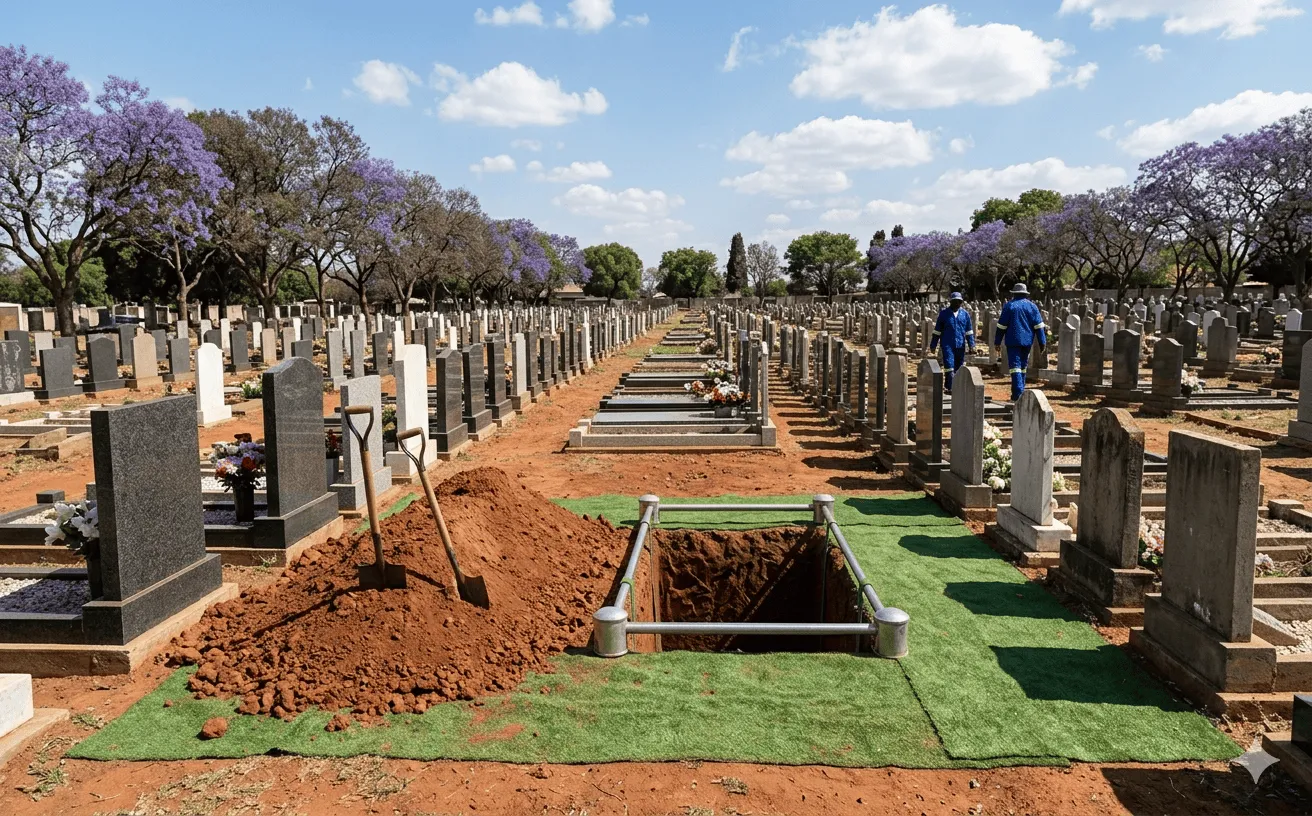
A basic but dignified burial in a municipal cemetery with a community-style funeral can be arranged for R10,000-R15,000. A full-service funeral through a premium funeral home with a private cemetery plot, catering for 200 guests, and a granite tombstone can exceed R80,000.
Coffins and Caskets: Where Most of the Money Goes
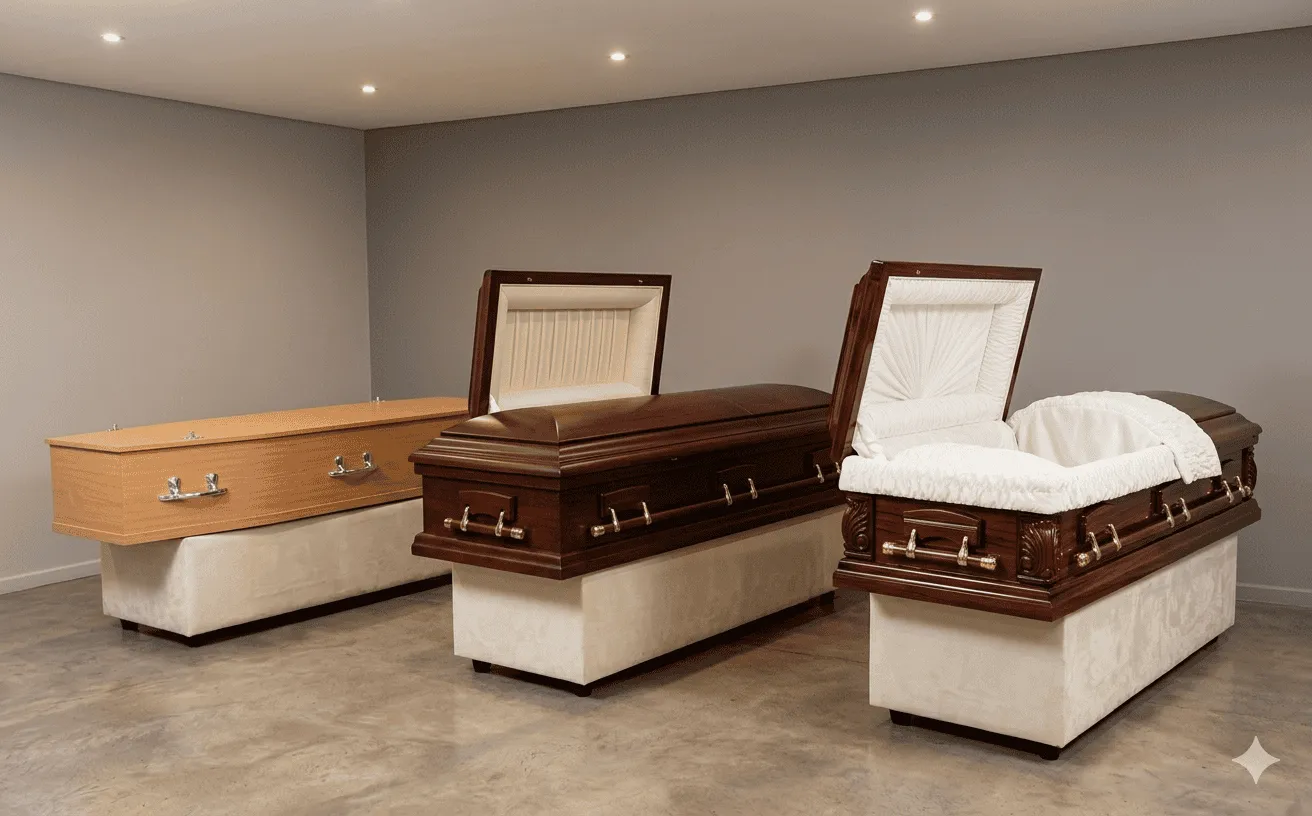
The coffin is nearly always the single biggest cost in a funeral - and the area with the widest price range. Understanding the options helps you make an informed choice rather than an emotional one under pressure.
Chipboard (flatpack) coffins: R1,500 - R4,000
These are the most affordable option and are used in the majority of South African funerals. They are made from compressed wood particles covered with a veneer or fabric. They are functional, dignified, and entirely appropriate. Many families do not realise that the expensive wooden coffins they see in showrooms are not a legal requirement - a body can be buried in any suitable container.
Solid wood coffins: R5,000 - R25,000
Pine, meranti, and oak are the most common woods. The price depends on the wood type, finish quality, and hardware (handles, lining). A solid pine coffin with a satin lining typically costs R6,000-R10,000.
Premium and designer caskets: R15,000 - R45,000+
Mahogany, imported hardwoods, and metal caskets fall into this range. They are available from larger funeral homes and are sometimes required by specific cultural or religious traditions. Unless there is a specific reason, most families find that a mid-range solid wood coffin is more than adequate. For a full breakdown by material, including what actually drives the price and what to ask before you buy, see our guide to coffin and casket prices in South Africa.
You are not legally obligated to buy the coffin from your funeral home. Independent coffin suppliers - many of whom advertise on Facebook Marketplace and Gumtree - sell the same products at 30-50% lower prices. Ask your funeral home if they allow a third-party coffin; most do, though some charge a small handling fee.
Burial vs. Cremation: A Cost Comparison
Cremation is almost always cheaper than burial, primarily because it eliminates the cost of a burial plot, grave digging, and a tombstone. Here is a side-by-side comparison:
| Category | Burial | Cremation |
|---|---|---|
| Body care and documentation | R3,000 - R6,000 | R3,000 - R6,000 |
| Coffin | R3,000 - R25,000 | R1,500 - R4,000 |
| Plot / cremation fee | R1,500 - R50,000 | R3,000 - R8,000 |
| Grave digging | R800 - R3,500 | N/A |
| Tombstone | R3,000 - R25,000 | N/A (urn R300-R3,000) |
| Typical total | R15,000 - R60,000+ | R8,000 - R22,000 |
Cremation is growing in South Africa, particularly in urban areas. According to the Cremation Institute of Southern Africa, approximately 60% of disposals in Johannesburg are now cremations, compared to less than 15% nationally as recently as 2005. The shift is driven primarily by cost and the increasing scarcity of burial land in major metros. If cremation is the route you are considering, our cremation costs guide for South Africa covers the crematorium fee, the coffin, urns, the paperwork and how to bring the total down.
The Hidden Costs Nobody Warns You About
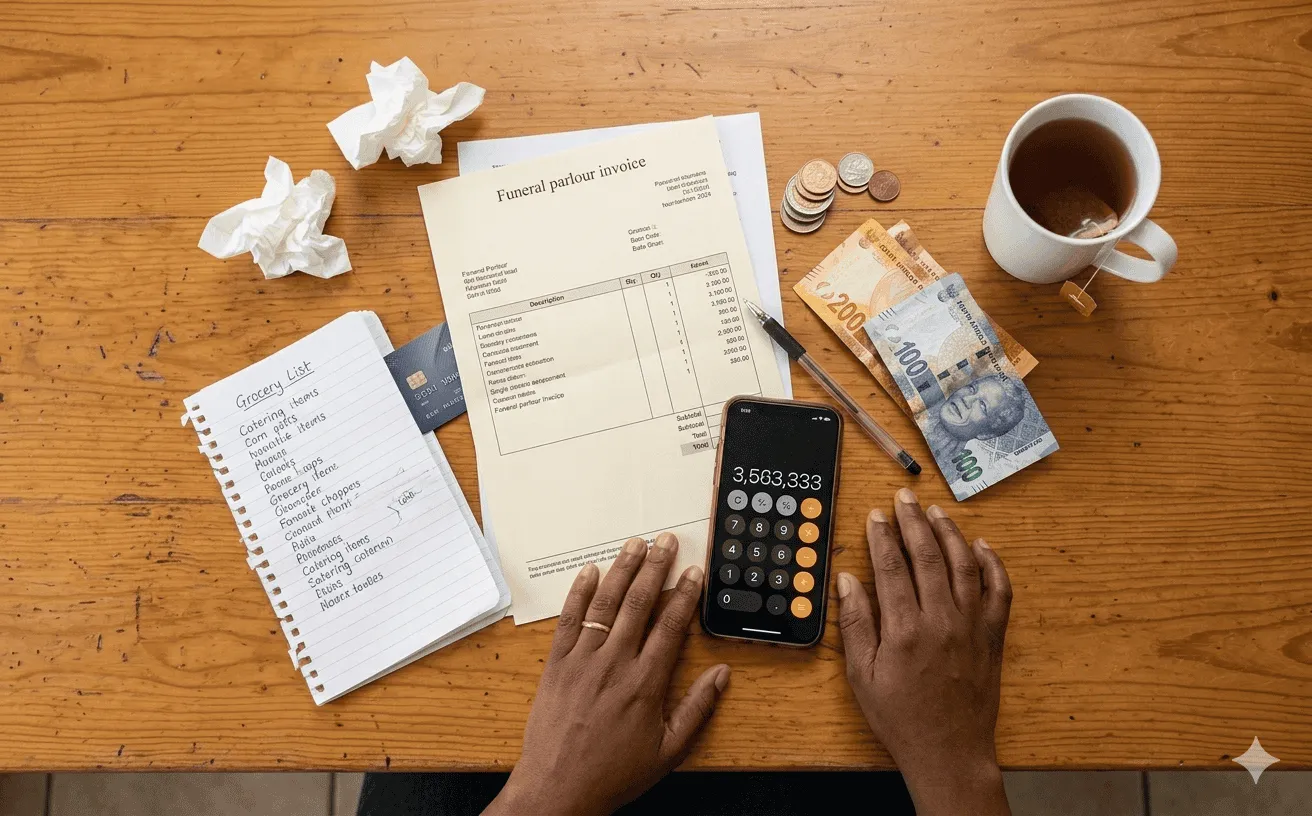
Beyond the funeral home's itemised bill, several costs catch families off guard:
Repatriation
If the deceased was living or working away from their home province - or their family homestead is in a rural area - the body must be transported. Long-distance repatriation within South Africa costs R5,000-R15,000 depending on distance. Cross-border repatriation (e.g., from Zimbabwe or Mozambique) can exceed R30,000.
Post-mortem delays
If the death was unnatural and a post-mortem is required, the body is held at a state mortuary. While storage is free, the delay means the family may need to extend accommodation for out-of-town relatives, postpone leave from work, and bear the emotional cost of waiting. In busy mortuaries like Johannesburg's Diepkloof facility, post-mortem results can take 2-6 weeks.
Night vigil catering
The umkhuleko (night vigil) is a significant community event in many South African cultures. Food and drinks for 50-200 people over an entire night can cost R2,000-R8,000 if purchased commercially. Many communities offset this through communal contributions - each household brings a dish, a box of tea, or a bag of sugar.
Travel and accommodation for distant family
When family members travel from other provinces or countries, the bereaved family often covers - or partially covers - their transport and accommodation. This can add R5,000-R20,000 to the total cost, especially for families with roots in the Eastern Cape, Limpopo, or KwaZulu-Natal whose children and grandchildren now work in Gauteng.
After-tears gathering
The after-tears - a meal served after the burial - is a standard part of South African funerals. For a large funeral, catering for 200-400 people (including hired plates, cutlery, and a marquee) can easily cost R15,000-R30,000. This is often the second-largest expense after the coffin and burial.
How to Pay for a Funeral
Funeral insurance (burial policies)

Funeral policies are the most common method. According to a Statistics South Africa General Household Survey, approximately 28% of all South African households have at least one funeral policy. Payouts range from R10,000 to R100,000 depending on the premium and provider. Major providers include AVBOB, Old Mutual, Hollard, Clientele Life, and 1Life.
File your claim as soon as possible - most insurers are required by the FSCA to process funeral claims within 48 hours once all documents are submitted. You will need the death certificate, the policy document, and the policyholder's ID.
Stokvels and burial societies
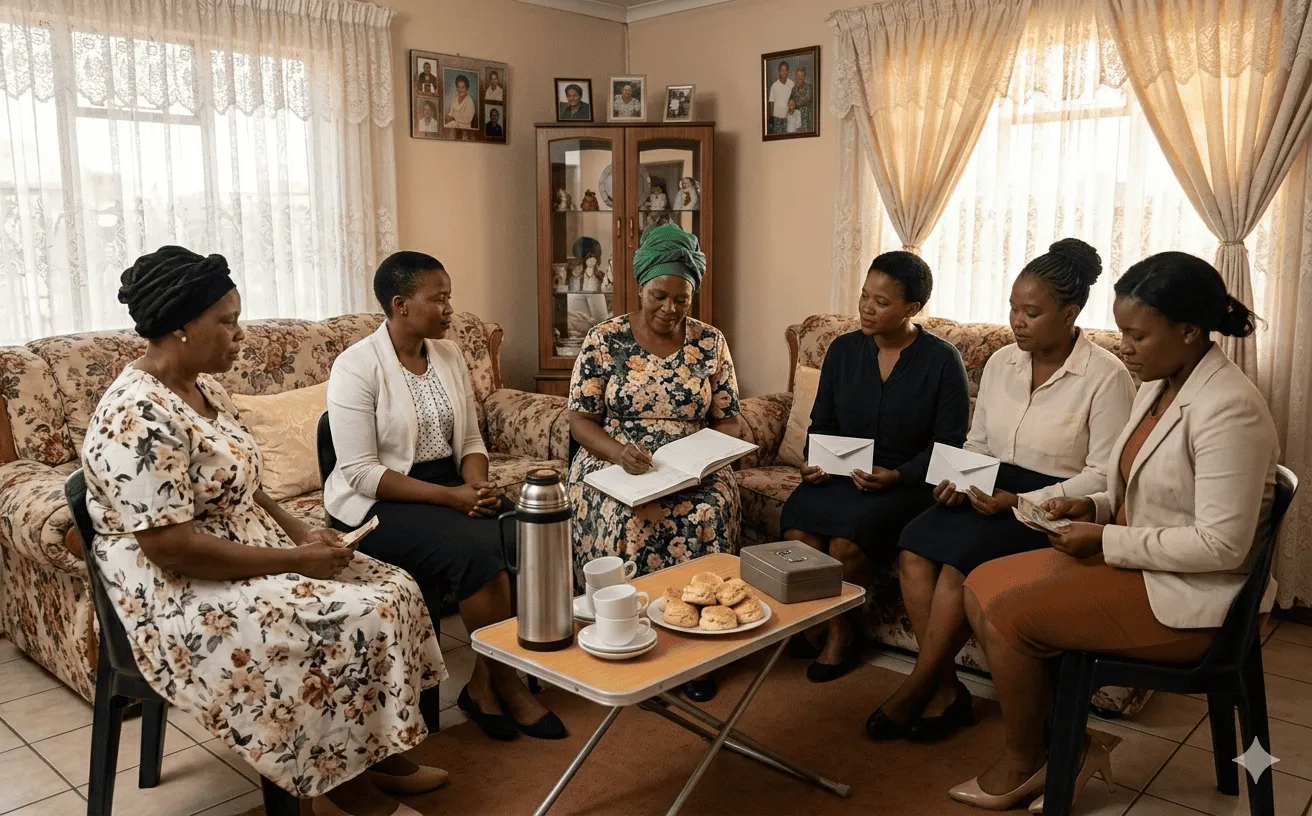
An estimated 11 million South Africans belong to a stokvel or burial society, according to the National Stokvel Association of South Africa (NASASA). These community savings groups contribute monthly and pay out a lump sum - typically R5,000-R30,000 - when a member or their immediate family member dies. Some burial societies also provide practical support: cooking teams, transport coordination, and programme printing.
Employer death benefits
Many employers offer a death-in-service benefit - usually 2-4 times the employee's annual salary - through their group life insurance. Additionally, the employee's pension or provident fund may pay a lump-sum benefit to nominated beneficiaries. Contact the deceased's HR department immediately.
Crowdfunding and community donations

When families cannot cover costs through insurance or savings, contributions from extended family, church members, colleagues, and friends fill the gap. Setting up a transparent, trackable donation page - rather than passing cash envelopes - ensures every contribution is recorded and the family can account for how the money was spent.
Accept Funeral Donations Transparently
TributePoint lets families accept secure online contributions through PayFast directly on the memorial page. Every donation is tracked and recorded - no cash envelopes, no confusion.
Create a Free Tribute PageHow to Reduce Costs Without Losing Dignity
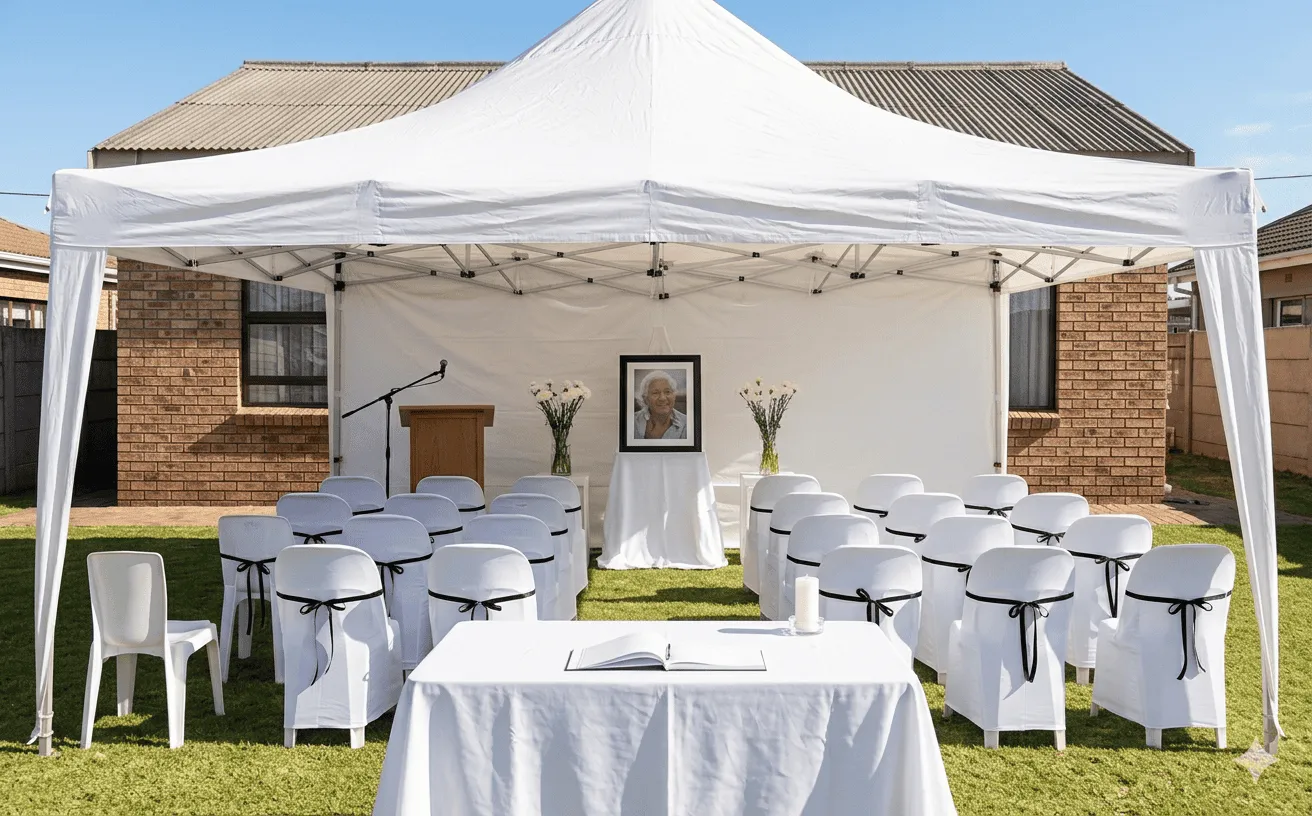
Dignity is not measured in rands. A funeral can be simple, affordable, and still deeply meaningful. Here are practical ways to reduce costs:
- Compare funeral homes. Get at least three written quotes. Prices for the same service can vary by 50% or more between providers in the same city.
- Buy the coffin separately. Independent suppliers are almost always cheaper than funeral home showrooms.
- Choose a municipal cemetery. Private memorial parks are beautiful but cost 3-10 times more than a municipal plot.
- Consider cremation. It eliminates plot, grave digging, and tombstone costs entirely.
- Let the community cook. In most South African communities, communal catering is expected and welcomed. Accept the help.
- Use a digital programme instead of printing. A shared link to a digital obituary page can replace - or supplement - expensive printed programmes.
- Skip the newspaper death notice. Share funeral details via WhatsApp and a digital memorial page instead. A newspaper ad reaches a small audience for a high price.
- Delay the tombstone. There is no legal deadline for erecting a tombstone. Many families wait 6-12 months to save and choose the right design.
The Consumer Protection Act (CPA) gives you the right to an itemised price list from any funeral home before you sign a contract. You may also cancel a funeral service agreement within 5 business days if you change your mind about the provider. No funeral home may refuse to release a body because of an unpaid bill - this is illegal.
Do You Need a Funeral Policy? A Realistic Assessment
Funeral policies are heavily marketed in South Africa - adverts appear on taxis, radio stations, pamphlets in every mall, and door-to-door sales. But are they always worth it?
The answer depends on your circumstances. A funeral policy makes sense if you have no savings, no death-in-service benefit from an employer, and would otherwise have to borrow money. It makes less sense if you already have life insurance, emergency savings of R30,000+, or belong to a burial society that provides a sufficient payout.
Watch out for premium escalation - many policies increase monthly premiums by 5-10% annually. A R150/month policy can become R400/month after a decade. Read the fine print, compare annually, and never take more than one funeral policy for the same household unless you genuinely need the extra cover.
Frequently Asked Questions
What is the cheapest funeral option in South Africa?
A direct cremation - where the body is cremated without a ceremony - is the most affordable option, costing R5,000-R8,000. A basic burial in a municipal cemetery with a chipboard coffin and community catering can be arranged for R10,000-R15,000.
Does medical aid cover funeral costs?
No. Medical aid covers healthcare while a person is alive, not funeral expenses. However, some medical aids partner with funeral benefit providers as an add-on. Check your plan documents or call your scheme directly.
Can a funeral home hold the body if I cannot pay?
No. Under the Consumer Protection Act, a funeral home may not hold a body as leverage for payment. If a funeral home refuses to release a body, contact the Department of Trade, Industry and Competition or the National Consumer Commission.
How quickly does funeral insurance pay out?
Most funeral policies pay within 48 hours of receiving all required documents (death certificate, policy document, ID of the deceased and claimant). Some providers offer same-day payouts for straightforward claims.
Is it cheaper to be buried or cremated?
Cremation is cheaper - typically R8,000-R22,000 total compared to R15,000-R60,000+ for burial. The difference is mainly due to the burial plot, grave digging, and tombstone costs that cremation avoids.

Naledi Maseko is TributePoint's Memorial Planning Editor. She writes practical guides on obituary writing, funeral preparation, funeral costs, and the administrative steps South African families face after a loss.
Also helpful: Create a TributePoint memorial page when you are ready to share service details, or explore more practical support in our South African funeral guides.