South Africa is one of the most culturally diverse countries in the world, and funeral dress codes vary significantly across communities, religions, and regions. What is appropriate at a traditional Zulu funeral may be entirely different from what is expected at a Muslim janazah or a modern cremation ceremony. This guide covers funeral attire customs across South African cultures so you can dress respectfully, wherever you are.
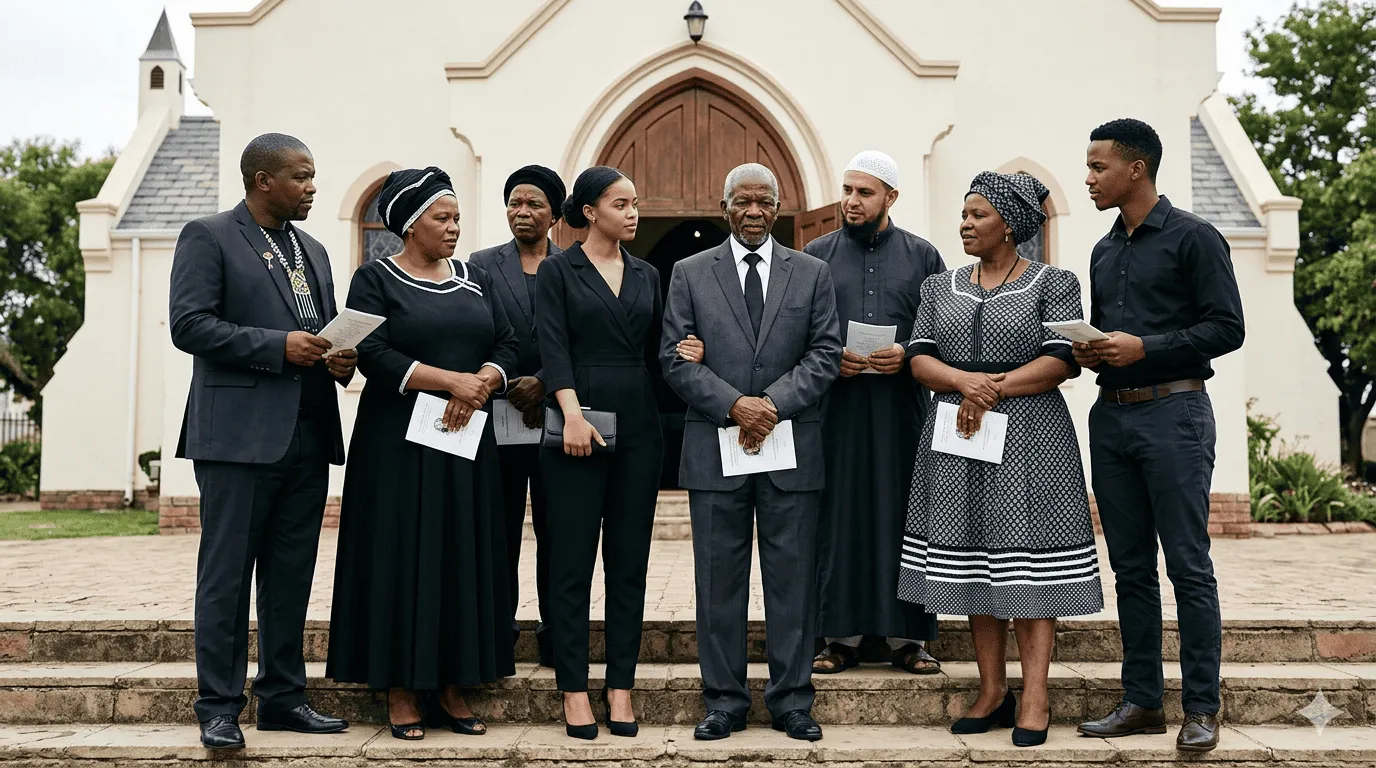
The General Rule: Respectful and Conservative
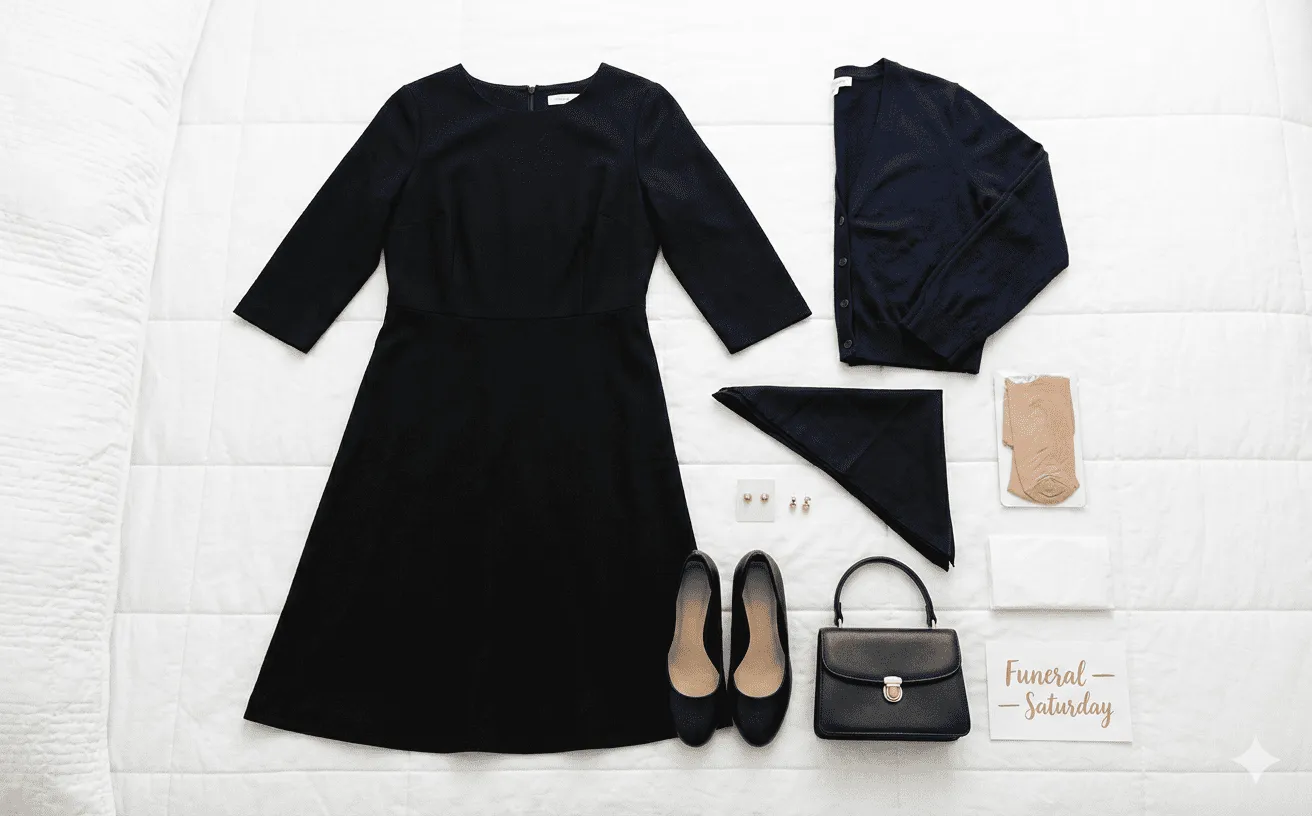
Regardless of culture or religion, the universal principle for funeral attire is respectful, modest, and understated. You are not the focus - the deceased and the bereaved family are. Your clothing should communicate that you are there to support, not to attract attention.
In most South African communities, the following basics apply:
- Black, dark navy, or dark grey are the safest colours across nearly all cultures
- Avoid bright colours, loud prints, and flashy accessories unless the family has explicitly requested a colour theme
- Cover shoulders and knees - especially at church funerals, traditional ceremonies, and Muslim services
- Remove hats indoors at church services (men); women may keep head coverings
- Avoid revealing clothing - low necklines, short skirts, sleeveless tops, and transparent fabrics are inappropriate in virtually every context
If you do not know the cultural or religious background of the family, wear plain black or dark navy from head to toe. This is universally appropriate and will never cause offence.
Traditional African Funerals
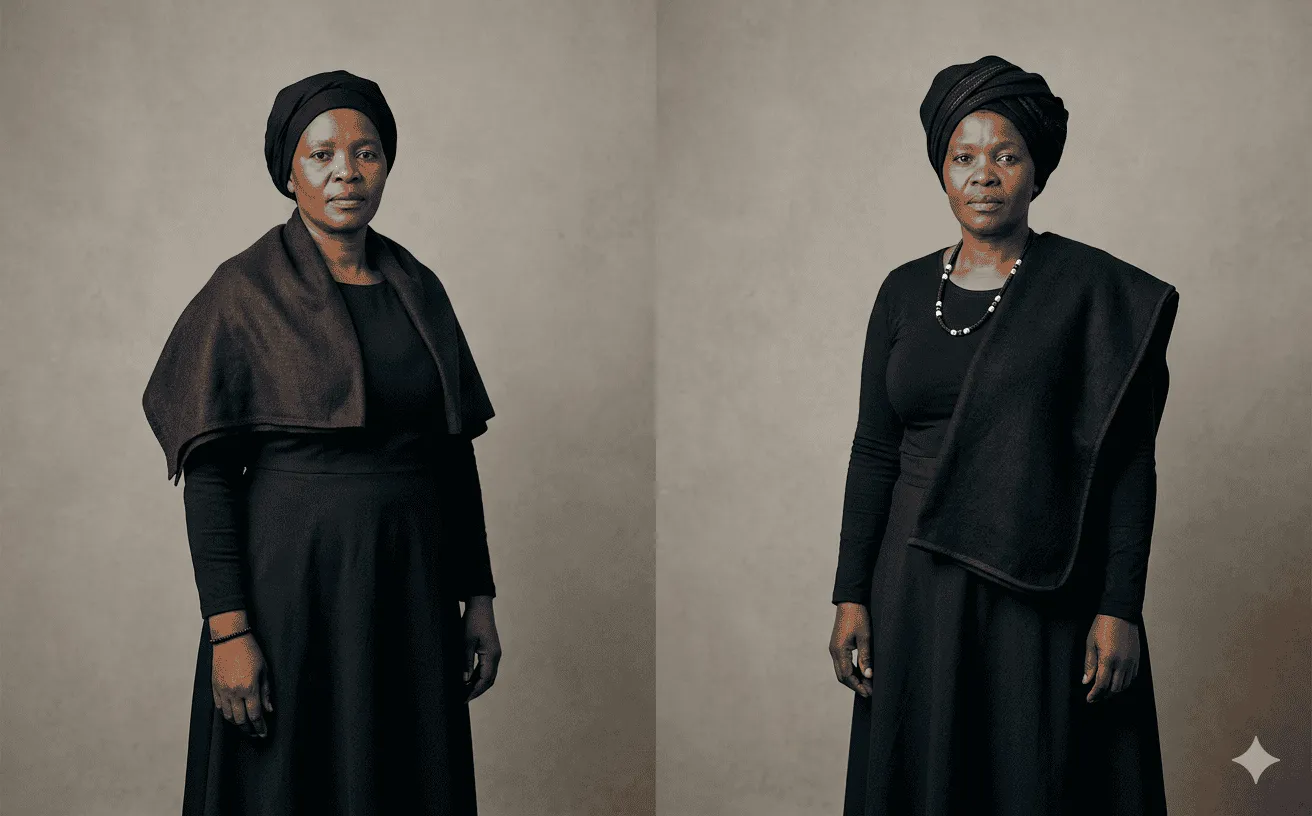
Across South Africa's African communities, funerals are deeply communal events that can draw hundreds of attendees. Dress expectations vary by ethnic group, the status of the deceased, and whether the funeral follows traditional customs or Christian rites (or both, which is common).
Zulu (amaZulu)
At Zulu funerals, attendees typically wear black or dark, sombre clothing. Close family members - particularly the widow (umfelokazi) - often wear full black for an extended mourning period that can last up to one year. During the funeral itself, the widow may wear a black skirt, top, and headscarf (iduku).
At traditional funerals, you may see animal skins (izikhumba) and traditional Zulu attire worn by cultural leaders and family elders. If you are not Zulu, do not wear traditional Zulu garments unless explicitly invited to do so. Plain black clothing is always appropriate for guests. For a deeper understanding, read our guide to Zulu funeral traditions and customs.
Xhosa (amaXhosa)
Xhosa funerals place great importance on cultural protocol. Black is the standard colour of mourning. Married women typically wear a black iqhiya (headwrap) and long black skirt. At some traditional Xhosa funerals, especially rural ones in the Eastern Cape, elderly women may also wear a black blanket (ingubo) over their shoulders.
For men, a dark suit, shirt, and tie is the standard. Some male elders may wear a traditional Xhosa blanket. If the funeral includes an umbuyiso (bringing the spirit home ceremony) at a later date, you may be expected to wear specific attire - the family will advise.
Sotho / Tswana / Pedi
In Sotho, Tswana, and Pedi communities, funeral attire follows similar principles: dark, conservative clothing. The famous Basotho blanket - the seana marena - may be worn by close family and cultural elders, particularly in Lesotho and the Free State.
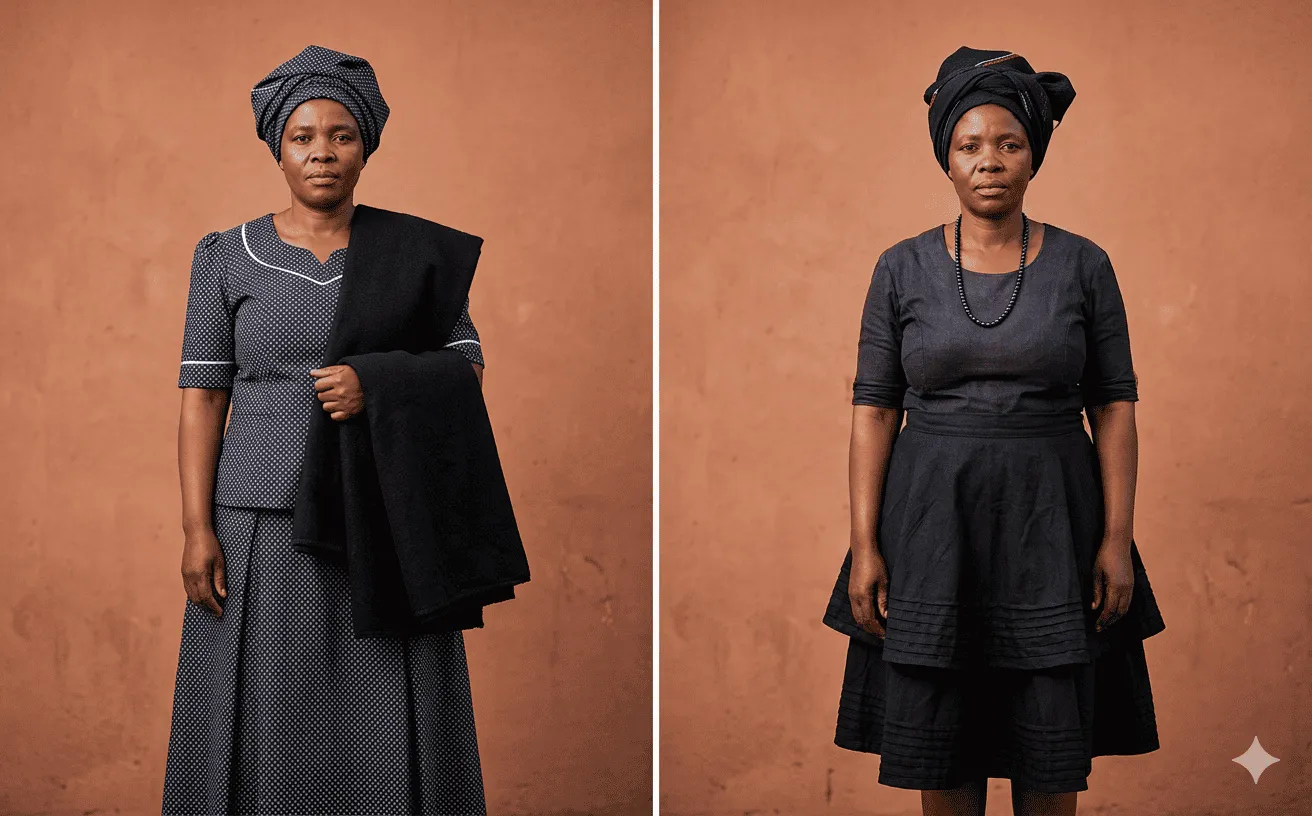
Women typically wear long black dresses or skirts with a headscarf. Some families provide a specific print fabric (German print / Shweshwe) for family members to wear matching outfits at the funeral, which is a sign of family unity.
For guests who are not part of the family, black or dark grey clothing is appropriate. Do not wear the family print unless you are given the fabric by the family.
Venda (VhaVenda) and Tsonga (VaTsonga)
Venda and Tsonga funerals are typically conservative. Black remains the dominant colour. Women wear long dark clothing with a headscarf. In the Limpopo region, some traditional funerals may incorporate cultural elements such as the Venda tshirivha (ceremonial cloth), but this is reserved for family members and elders.
Guests should wear plain dark clothing. If the funeral takes place in a rural area, be prepared for outdoor seating under a tent - wear comfortable shoes that can handle grass and unpaved ground.
Christian Church Funerals
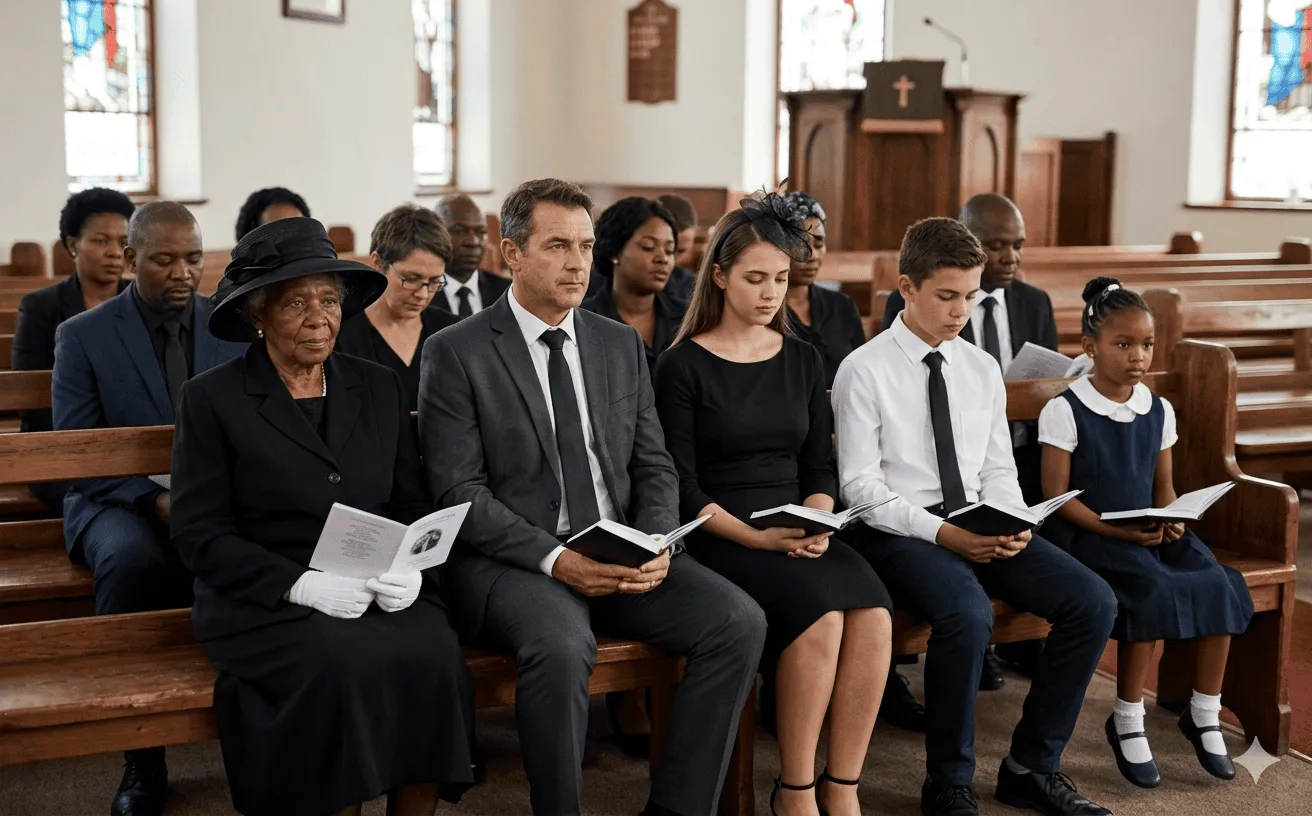
The majority of South African funerals are conducted in a church or with a church minister presiding, according to Statistics South Africa data showing that over 80% of the population identifies as Christian. Church funeral dress codes tend to be formal and conservative.
- Men: Dark suit (or at minimum, dark trousers and a collared shirt). A tie is expected at most church funerals.
- Women: Dark dress or skirt below the knee, with covered shoulders. A headscarf or hat is customary for married women in many black South African churches (ZCC, Methodist, Catholic, Anglican).
- Children: School uniform is acceptable for children, and is very common at South African funerals - particularly if the funeral is held on a school day.
Zion Christian Church (ZCC) members typically wear their church uniform - the green, yellow, and white garments with the distinctive badge. Apostolic churches often wear white robes. If you are a member, wearing your church uniform is appropriate. If you are not, standard dark funeral attire is correct.
Muslim Funerals (Janazah)
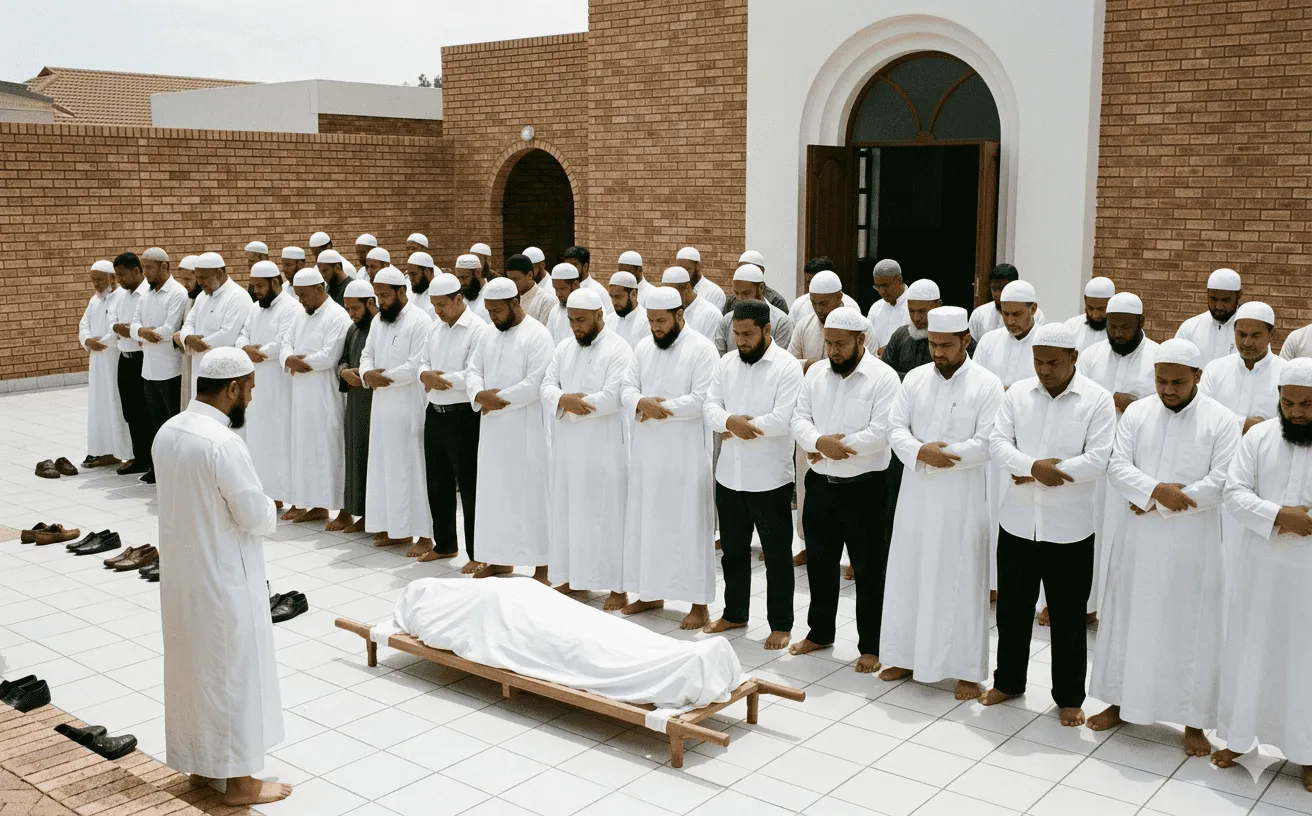
Muslim funerals in South Africa follow Islamic tradition, with specific dress expectations. The Muslim Judicial Council (MJC) of South Africa and various ulema bodies guide funeral practices.
- Men: Simple, modest clothing. White or neutral tones are preferred - reflecting the simplicity of the kafan (burial shroud). Dark clothing is also acceptable. A kufi (prayer cap) is customary for Muslim men.
- Women: Long, loose-fitting clothing that covers arms and legs. A headscarf is required for women at a Muslim janazah - even for non-Muslim attendees. Hair must be fully covered.
- Shoes: You will need to remove shoes when entering the masjid (mosque) for the funeral prayer. Wear shoes that are easy to slip on and off.
- No black required: Unlike most Christian and traditional funerals, black is not expected at a janazah. White, grey, beige, and dark green are all common.
Muslim burials in South Africa happen quickly - often within 24 hours of death - so the dress expectation is practical and simple rather than formal.
Hindu Funerals and Cremation Ceremonies
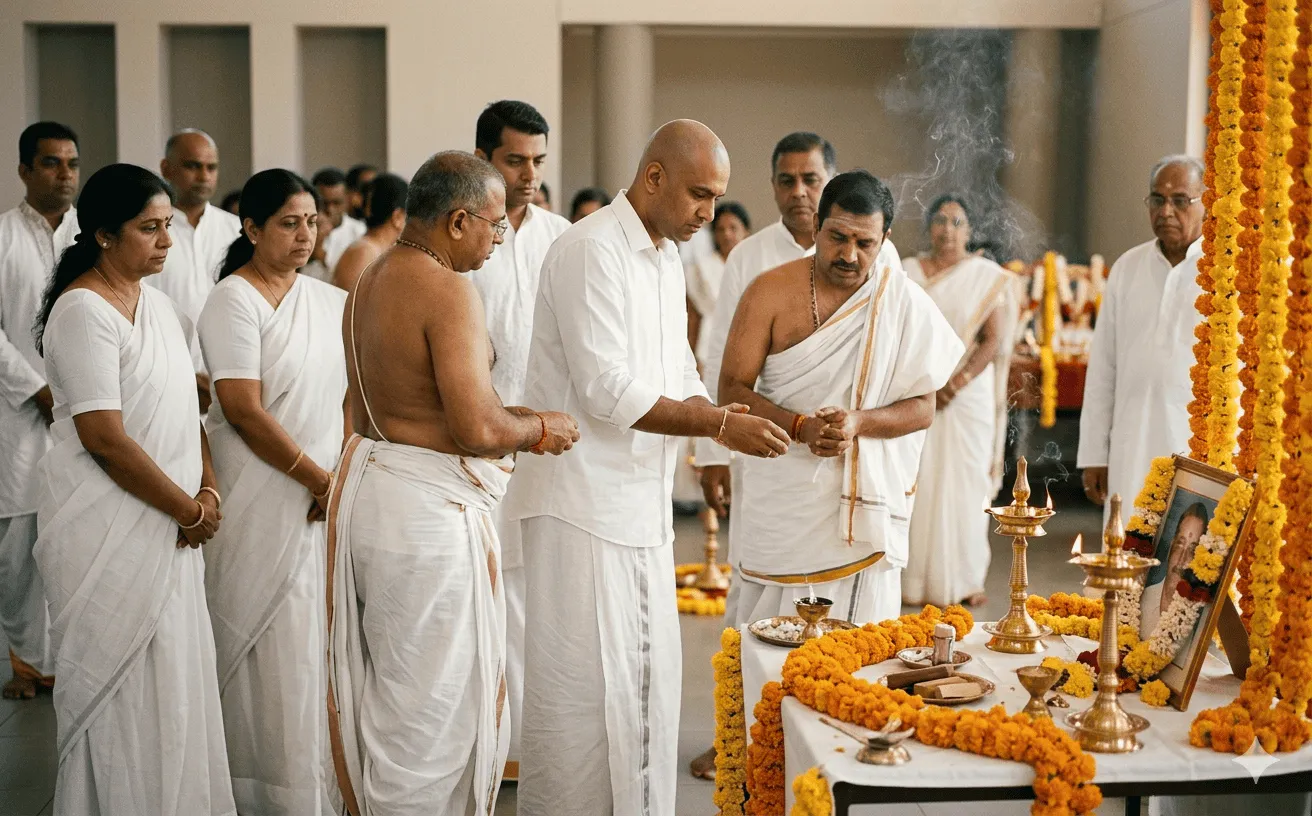
Hindu South Africans - primarily concentrated in KwaZulu-Natal around Durban - follow customs rooted in Indian tradition. Hindu funerals involve a cremation, often at a designated crematorium, followed by prayers at the family home.
- White is the colour of mourning in Hindu tradition, not black. Wearing white clothing is the most appropriate choice.
- Men typically wear white cotton shirts and trousers. A formal suit is not expected.
- Women wear white or off-white saris or simple outfits. Avoid red - red is associated with celebration and marriage in Hindu culture.
- Removing shoes is required before entering the prayer area.
- Jewellery and makeup should be minimal.
Jewish Funerals
South Africa's Jewish community, primarily based in Johannesburg and Cape Town, follows customs guided by the Beth Din (Jewish Court of South Africa). Jewish funerals are characterised by simplicity.
- Dark, modest clothing - black, navy, or charcoal grey.
- Men should wear a kippah (yarmulke) - paper kippot are usually provided at the cemetery for non-Jewish attendees.
- Women should dress modestly, with covered shoulders and knees.
- Jewish funerals are typically held outdoors at the graveside, so wear weather-appropriate clothing and shoes that can handle cemetery paths.
- Close family members may have a torn black ribbon (kriah) on their clothing - this symbolises their grief and is part of the mourning ritual.
Modern Memorial Services and Celebrations of Life
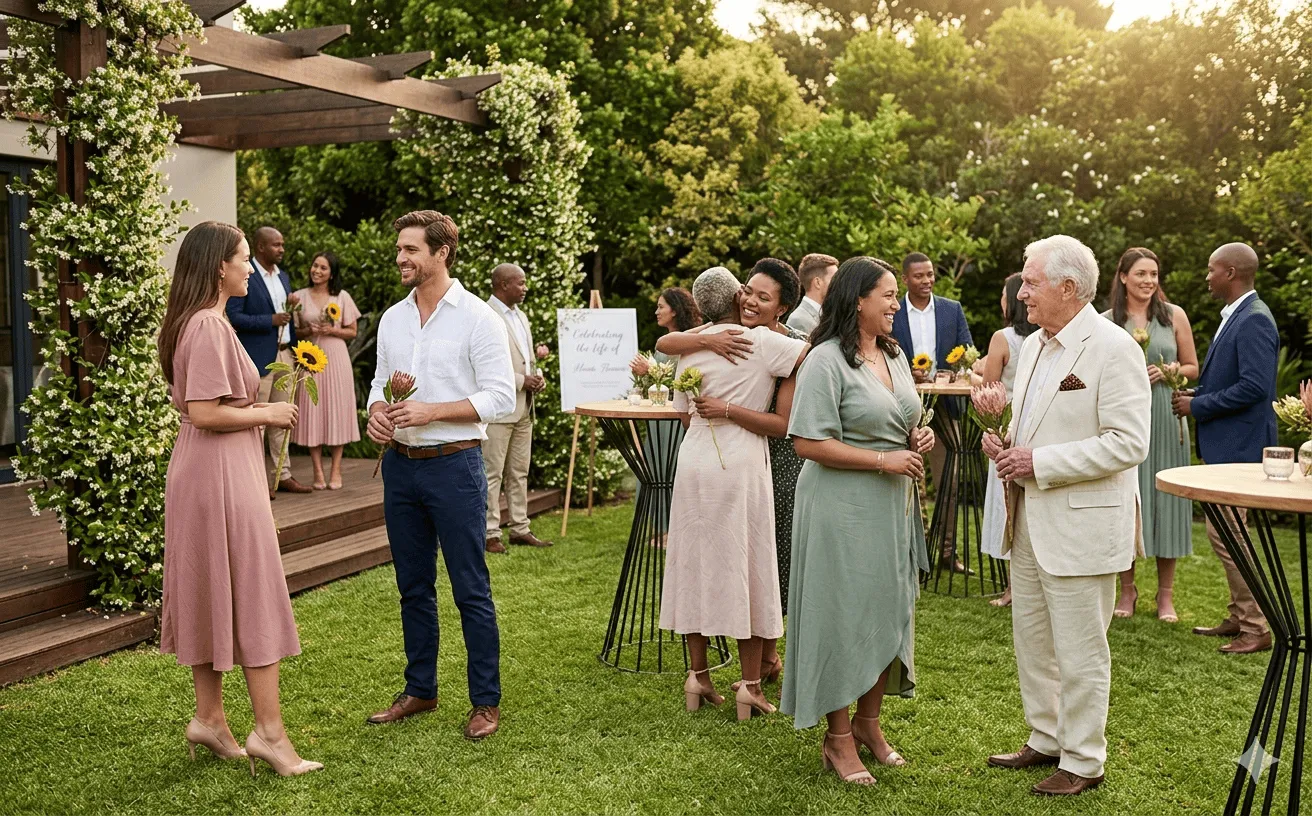
In urban South Africa, particularly among younger generations and in the Cape Town and Johannesburg metropolitan areas, a growing trend is the "celebration of life" service - a less formal memorial that focuses on happy memories rather than grief.
At these events, the family may request a specific dress code on the invitation or funeral notice:
- "Wear their favourite colour" - the deceased's favourite colour replaces black
- "Come in colour" - bright, cheerful clothing instead of dark mourning wear
- "Smart casual" - no suits required, but clean and presentable
- "Wear white" - increasingly popular for memorial services held separately from the burial
Always check the funeral notice or ask a family member before assuming a casual dress code. If no theme is specified, default to traditional dark clothing.
If the family has requested a specific colour or theme, respect it. Arriving in black when the family asked everyone to wear yellow can feel like a refusal to participate in the way they have chosen to honour their loved one.
Practical Considerations for South African Funerals
Weather and outdoor settings
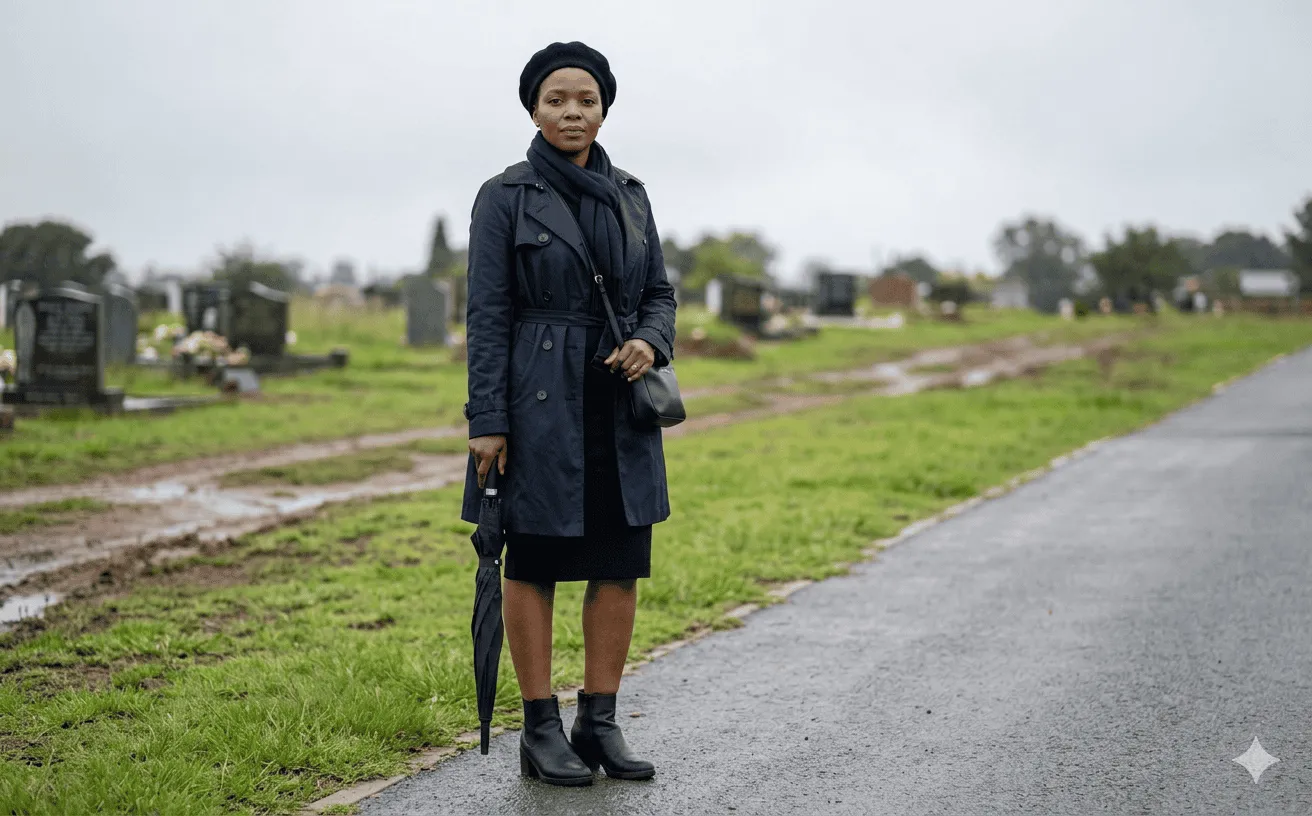
Many South African funerals - particularly in rural areas - involve outdoor elements: a ceremony under a tent in the family yard, a graveside service, or a walk from the church to the cemetery. In summer (December-February), temperatures in Limpopo, Mpumalanga, and KwaZulu-Natal can exceed 35-C. In winter (June-August), early morning graveside services on the Highveld can be bitterly cold.
- In summer: wear breathable fabrics. A dark cotton dress or light suit is better than heavy wool.
- In winter: layer up. A dark overcoat or blanket over formal clothing is perfectly acceptable.
- Always bring sunscreen, sunglasses, and water in summer. Funerals can last 3-5 hours.
- Wear sturdy footwear for cemetery visits - heels sink into soft ground and gravel paths are uneven.
Grooming and accessories
- Keep jewellery minimal and understated - no statement pieces or flashy watches
- Makeup should be natural and restrained
- Remove sunglasses when speaking to the family or during the service (outdoors excepted)
- Turn your phone to silent - not vibrate, silent
What to carry
- A handkerchief or pack of tissues
- Cash for a condolence contribution (common at African funerals - often placed in a collection at the door or given directly to the family)
- An umbrella if rain is expected
- A bottle of water for long outdoor services
Honour Their Memory Beyond the Day
A funeral lasts a few hours - a digital memorial lasts forever. Create a free tribute page with photos, the eulogy, and condolence messages that distant family and friends can visit at any time.
Create a Free Memorial PageWhat NOT to Wear - Across All Cultures

While specific rules vary, the following are inappropriate at virtually every South African funeral:
- Jeans - unless the family has specifically said "come casual"
- T-shirts with logos or slogans
- Athletic wear - tracksuits, sneakers, gym clothing
- Flip-flops or open sandals (except at some Hindu and Muslim services where shoe removal is expected)
- Bright red - considered inappropriate at funerals in most South African cultures (except some celebrations of life)
- Excessive perfume or cologne - strong scents in enclosed spaces can be overwhelming for grieving people
- Military or organisational uniforms - unless you are there in an official capacity (SANDF, SAPS, fire services)
Frequently Asked Questions
Can I wear traditional African attire to a non-African funeral?
Generally, yes - if it is dark, modest, and respectful. A dark isishweshwe dress, a black shirt with a Madiba collar, or a dark wrap is appropriate at most South African funerals. Avoid wearing traditional attire from a culture that is not your own, as this may be seen as inappropriate.
Do I need to cover my head?
At Muslim janazahs, yes - all women should cover their hair. At traditional African funerals, married women customarily wear a headscarf (doek). At church funerals, many denominations expect married women to wear a headscarf. When in doubt, bring a dark scarf and observe what other women are wearing when you arrive.
What if I cannot afford formal dark clothing?
Do not let clothing stop you from attending. Clean, neat, dark clothing is sufficient - even if it is not a suit or formal dress. Your presence matters far more than your outfit. Many South African communities understand economic realities and do not judge funeral attendees by their clothing.
What do mourning family members wear in the weeks after?
In many black South African communities, the bereaved - especially widows - wear black clothing for a mourning period that can last from one week to one year, depending on cultural customs and family tradition. According to researchers at the University of the Witwatersrand, these mourning dress customs are evolving, with shorter mourning periods becoming more common in urban areas, though the practice remains deeply important in rural communities.

Thabo Dlamini is TributePoint's Cultural Traditions Researcher. He writes about South African funeral customs, etiquette, and faith traditions so families can plan with confidence and cultural respect.
Also helpful: Create a TributePoint memorial page when you are ready to share service details, or explore more practical support in our South African funeral guides.